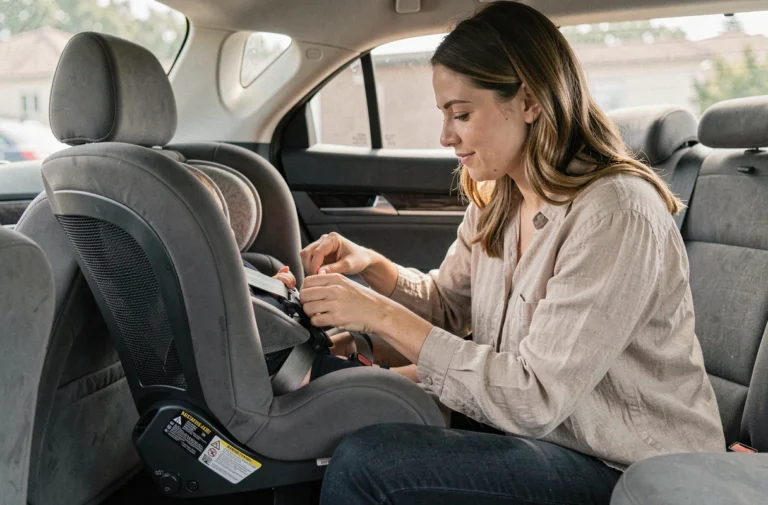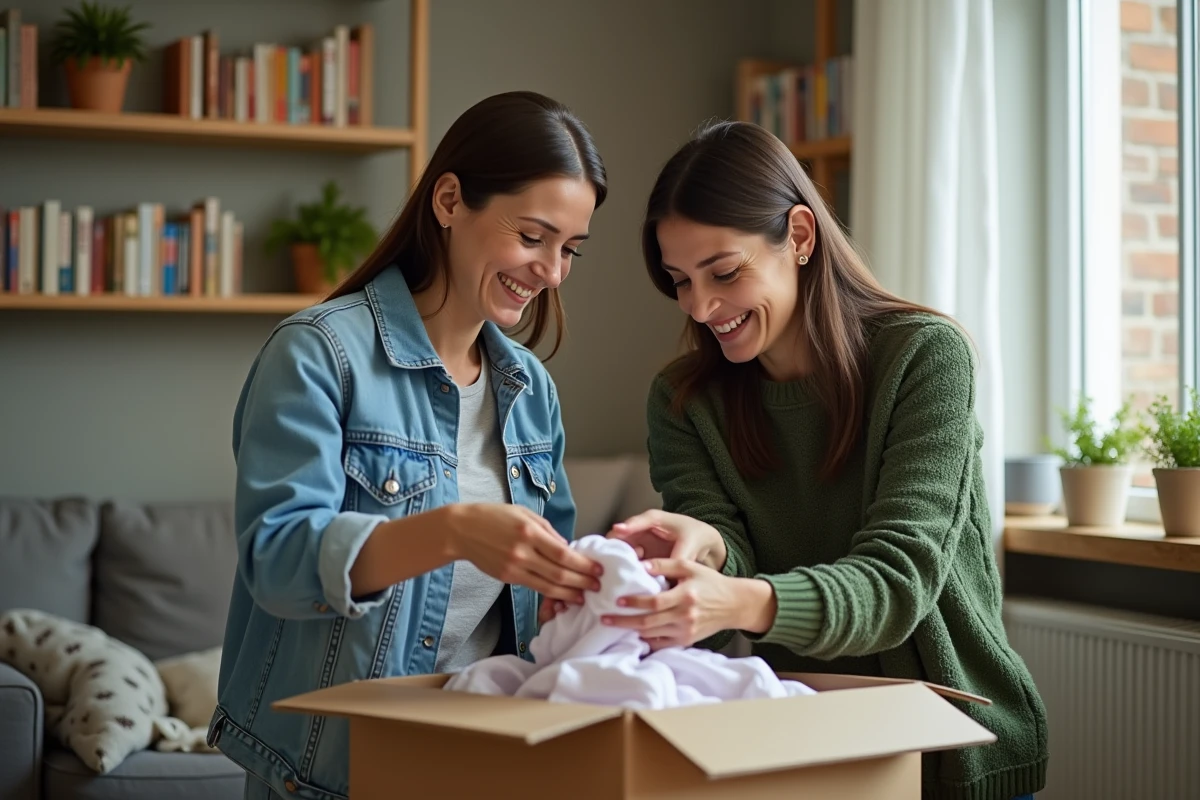
13% increase in registrations on peer-to-peer exchange platforms: this figure, provided by Ademe, shakes up certainties and reveals a reality less shiny than it seems. Despite this dynamic, barely 20% of families regularly use these tools for their daily needs. In some cities, obtaining local aid now requires a mandatory step: giving away part of one’s belongings before receiving a grant.
Yet, between accumulating formalities, distrust of the unknown, and uncertainty about the actual functioning of these solutions, barriers remain stubborn. However, a little organization would be enough to limit waste, lighten the bill, and make essential goods accessible to those who need them most.
Why exchanges and donations between families are becoming essential for more responsible consumption
The word is spreading, the practice is settling in: consuming differently is no longer a niche reserved for a handful of insiders. Now, families are getting involved, aware that every choice impacts their budget as well as the environment. ADEME is categorical: for a household of two adults and two children aged 6 to 13, the average monthly expenditure rises to €3,673. Every euro saved through exchange or donation is not a detail: it weighs heavily on daily life.
The rise of circular economy reflects this shift. Betting on durable, repairable, or recycled products reduces waste and conserves our resources. Giving new life to an object, lending a tool that is gathering dust in a closet, is a concrete way to act for one’s budget and for the planet. ADEME emphasizes the habits to adopt: choose solid, local, seasonal, organic products, or energy-efficient equipment.
This change is accelerating thanks to the sharing economy. Platforms like Family 2 Family are becoming part of the landscape. Beyond the exchange of objects, they weave social ties, promote local mutual aid, and spread eco-friendly actions accessible to all.
To measure the concrete impact of this approach, here’s what a local exchange allows:
- Reduce carbon footprint by limiting transportation
- Provide direct support to vulnerable families through tailored donations
- Limit waste through reuse rather than abandonment
Sobriety is no longer synonymous with deprivation, but with collective inventiveness. This movement is asserting itself, leading to a new way of thinking about consumption, closely aligned with the challenges of daily life.
What levers can encourage daily sharing and combat food waste?
The fight against food waste is no longer marginal. It has become a real concern for families wishing to adopt a responsible consumption. Collaborative platforms multiply opportunities to share, exchange meals, ingredients, or surplus, establishing a logic of mutual aid and waste reduction. Food banks and associations, true grassroots relays, redistribute food daily to those in need; in Paris, the associative organization allows for quick intervention, with effectiveness tailored to social emergencies.
Eating habits are changing, often driven by those acting on the ground. Preparing leftovers, prioritizing seasonal fruits and vegetables, relying on solidarity networks to exchange or give away what might be lost: all these actions fall under short supply chains and the circular economy. Every food item finds a purpose, rather than being thrown away.
To adopt these new reflexes, here are the practices to prioritize:
- Respect sorting guidelines to facilitate recycling
- Use organic waste for compost, thus reducing environmental impact
- Share excess during local events or through neighborhood networks
Collective initiatives are shaping a supportive fabric day by day. Pooling resources and know-how, organizing groups to limit waste, or sharing tips is building a collaborative economy that serves both health and quality of life.
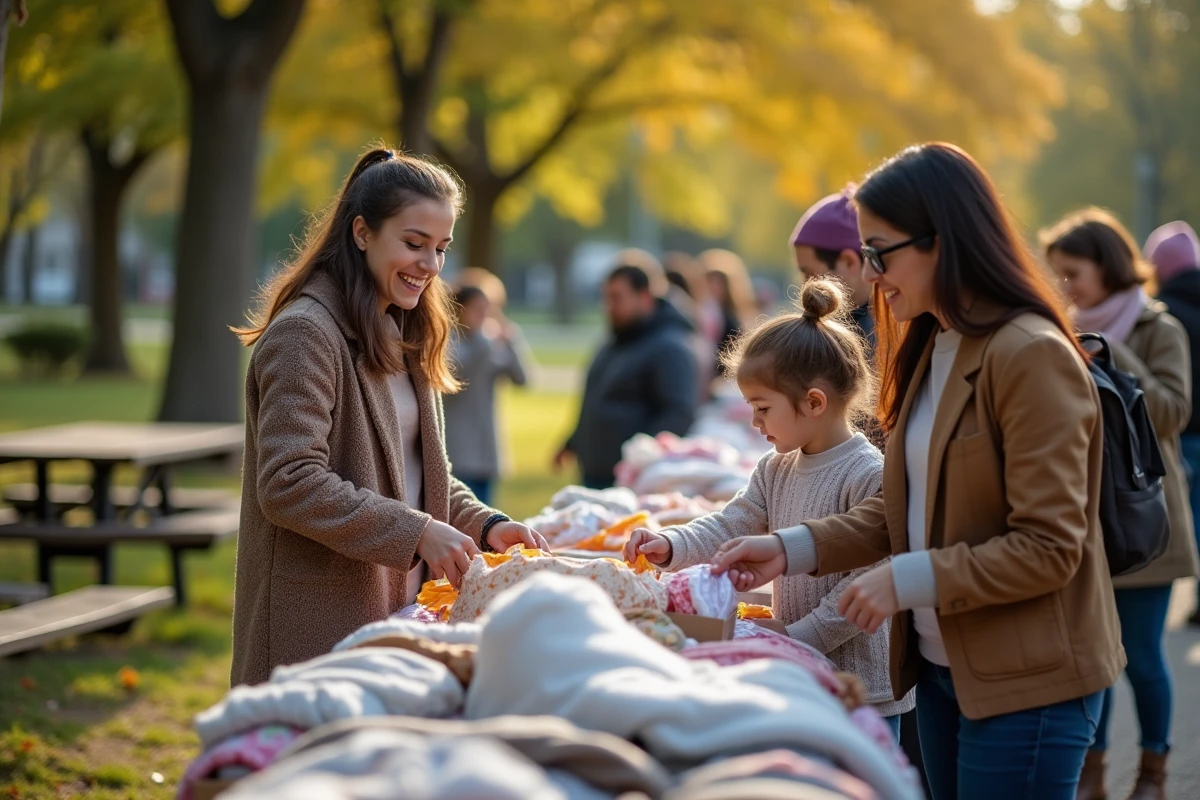
Concrete examples and tips for building solidarity ties while adopting eco-responsible actions
In cities as well as in the countryside, families are looking to extend the life of the objects around them. Donating a toy, passing on children’s clothes, or offering a refurbished appliance: these actions limit waste and create connections. Local associations receive thousands of donations each year—clothes, objects, food—that find a second use with families in need.
To act on their scale, several concrete options are available to everyone. Opt for durable, robust, and repairable products, as recommended by ADEME. Regularly sort out what is no longer needed and benefit active associations throughout France: Emmaüs, Secours populaire, Croix-Rouge. But pooling doesn’t stop at material goods: sharing a basket of vegetables from the farmer with a neighbor or offering a prepared dish to a neighboring family also falls within this solidarity dynamic.
In daily life, these actions take shape through simple choices:
- Adopt sorting guidelines to facilitate waste recovery
- Compost organic waste to limit carbon footprint
- Prioritize local and organic products to reduce energy impact and ensure everyone’s health
Adopting a responsible consumption also means questioning the origin and reliability of each good. Lina Hanna, a decluttering coach, emphasizes the importance of regularly decluttering to share better. Florence Clément, at ADEME, encourages enriching practical skills to minimize impact over time. This solidarity is built through simple gestures, where savings, ecology, and conviviality intertwine, together shaping a collective horizon that is fairer and more vibrant.