
The jump rope remains a reference in cardio training, but it imposes constraints that many practitioners underestimate: repeated impact on the ankles and knees, the need for clear overhead space, and technical difficulty that discourages beginners. Seeking an alternative does not mean giving up on intensity. Rather, it involves identifying what type of cardio solicitation suits your body type, your training location, and your actual goals.
Joint impact and plyometric constraint: the real selection criterion

Most lists of replacement exercises simply line up names (burpees, jumping jacks, sprints) without addressing the main reason for seeking an alternative. For overweight practitioners or those experiencing knee pain, the issue is not cardio itself, but the plyometric component, meaning the landing phase that generates repeated mechanical stress.
A meta-analysis published in Sports Medicine in 2023 confirms that low-impact HIIT improves VO₂max without increasing overuse injuries compared to more plyometric formats. Indoor cycling, rowing, or elliptical machines replicate the cardiovascular gains of jumping rope with significantly reduced joint constraints.
Specifically, if you are looking for what to replace the jump rope with on Fou de Sport, the first filter to apply is not perceived intensity, but the level of ground impact that your joints can tolerate over time.
Sports physiotherapists and podiatrists have been relaying a converging observation for several years: multidirectional quick step exercises (agility ladder, lateral steps, crossover steps, dynamic shadow boxing) engage the cardiovascular system comparably to the rope while distributing the load across multiple planes of movement. The foot no longer endures a repetitive vertical impact identical with each cycle.
Cardio without equipment in an apartment: what works beyond marketing
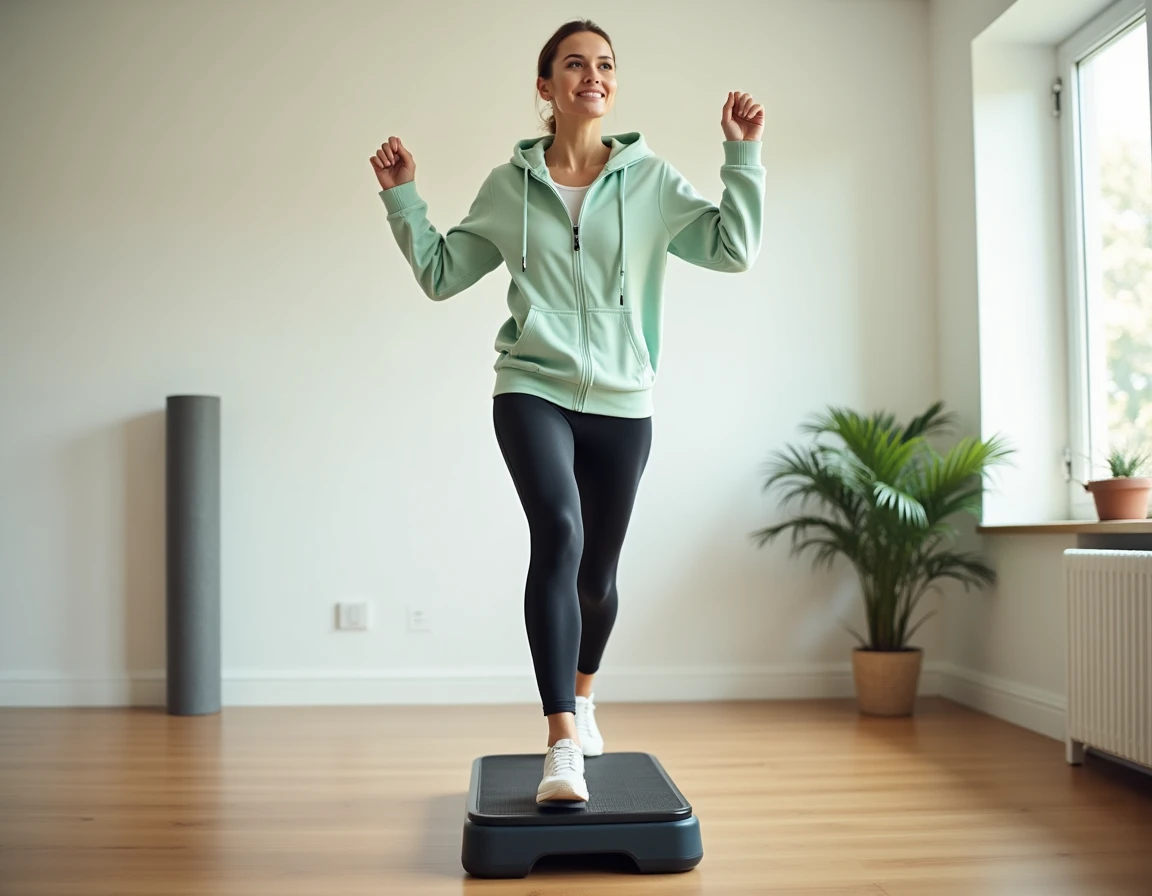
Since the post-Covid period, several French-speaking platforms (Décathlon Coach, Freeletics, FizzUp) have launched “no equipment cardio” programs presented as alternatives to jogging and jumping rope. Guided sessions typically last between ten and twenty minutes and combine modified jumping jacks, high knees in place, and dynamic lateral steps, designed for small indoor spaces.
The format is appealing, but not all these alternatives are equal. Effectiveness depends on two parameters that apps rarely present explicitly:
- The target heart rate maintained throughout the session, not just the momentary peaks during maximum effort phases
- The actual volume of muscle work engaged, which conditions caloric expenditure much more than the number of jumps performed
- The programmed progression over the weeks, without which cardiovascular adaptation quickly plateaus
An exercise like rapid high knees in place may seem basic. In practice, maintained at high intensity in thirty-second intervals, it produces a heart rate response very close to that obtained with the rope. Field feedback varies on this point: some practitioners find the exercise monotonous and reduce intensity after a few minutes, which nullifies the desired effect.
Cardio exercises with lateral movement: a neglected angle
The jump rope works almost exclusively in the vertical plane (repeated jumps in place). One of its rarely mentioned flaws: it does not prepare the body for changes in direction. For practitioners of combat sports, team sports, or simply for those who want a more complete workout, lateral and multidirectional movements fill this gap.
Dynamic shadow boxing, practiced with quick movements and changes of support, constitutes a formidable cardio exercise. Amateur boxers with ankle mobility issues report using it as a direct substitute for the rope, with comparable results on endurance after several weeks.
The agility ladder placed on the ground offers another structured format. It imposes precise step patterns that gradually increase in speed. The benefit goes beyond pure cardio: foot-eye coordination improves, which has a direct transfer to most sports activities.
Rowing machine and indoor bike: when equipment changes the game
For those with access to a gym or at home, the rowing machine is probably the most underestimated alternative to jumping rope. It engages both the upper and lower body simultaneously, imposes a sustained breathing rhythm, and generates no joint impact. Used in a HIIT format (alternating intense phases and active recovery), it produces documented cardiovascular adaptations comparable to plyometric exercises.
The stationary bike, on the other hand, primarily engages the lower limbs. Its cardio interest is real but the muscle work remains more localized. For someone looking to replace the jump rope with a weight loss goal, the rowing machine offers a higher overall caloric expenditure than the bike at equivalent perceived intensity.
Building a cardio session without a jump rope: the concrete trade-offs
Rather than a list of interchangeable exercises, here are the trade-offs that truly matter when structuring your replacement training:
- If your constraint is joint-related: prioritize the rowing machine, elliptical, or bike in HIIT. Temporarily eliminate any exercise with a jumping phase
- If your constraint is space: rapid high knees, shadow boxing in place, and lateral shuffles work in less than two square meters
- If your goal is sports preparation: multidirectional exercises (agility ladder, quick lateral movements) provide a greater benefit than the rope for footwork and reactivity
- If your goal is pure caloric expenditure: the HIIT format on the rowing machine or bike, with short and intense intervals, remains the most effective for equal session duration
The jump rope has no single substitute. The choice depends on what you are looking to solve, not on what burns the most calories on a technical sheet. An exercise that you practice regularly at a good intensity will always outperform a theoretically optimal exercise that is abandoned after three weeks.