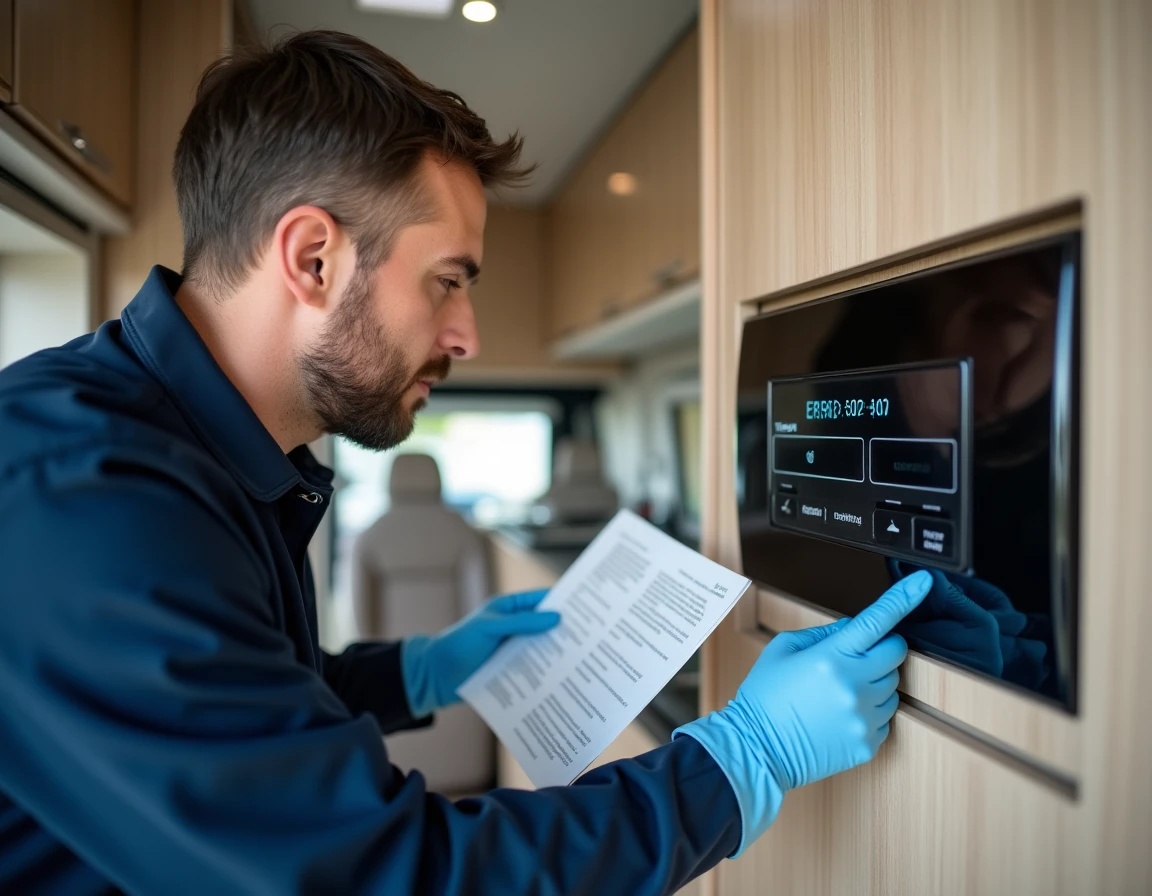
Truma heating and hot water systems equip the majority of motorhomes and camper vans sold in Europe. When a malfunction occurs, the control panel (CP Plus, iNet X, or simple LED indicator) displays a code made up of letters and numbers. This code identifies the nature of the fault detected by the onboard electronics. Understanding its structure allows for a quick distinction between what requires a simple check and what necessitates the intervention of a certified technician.
Displayed code, blinking code, and communication fault: three types of Truma signals

The most common confusion among users concerns the very nature of the signal. Truma uses at least three distinct signaling modes, and mixing them up skews the diagnosis from the start.
The clear displayed code appears on the screen of the CP Plus or iNet X panel in the form of an alphanumeric identifier (E133H, W255H, W517H). The initial letter distinguishes a blocking error (E) from a warning (W). The suffix H or sometimes other letters specifies the subsystem concerned, usually the heating or the boiler.
The blinking code, on the other hand, pertains to certain Combi devices without a digital screen. An LED blinks a specific number of times, with pauses between sequences. Counting these blinks is the only way to identify the fault. Confusing a fast blink with a slow blink leads to a misdiagnosis.
The third case, rarely documented in consumer guides, is the communication fault between the panel and the electronic board of the device. The screen then remains silent or displays a generic symbol, without an exploitable code. This type of failure points to wiring issues, a corroded connector, or a faulty board, rather than the gas or water circuit.
Keeping a list of Truma error codes in French handy helps to sort through these three situations before any manipulation.
Common Truma error codes: what they really indicate
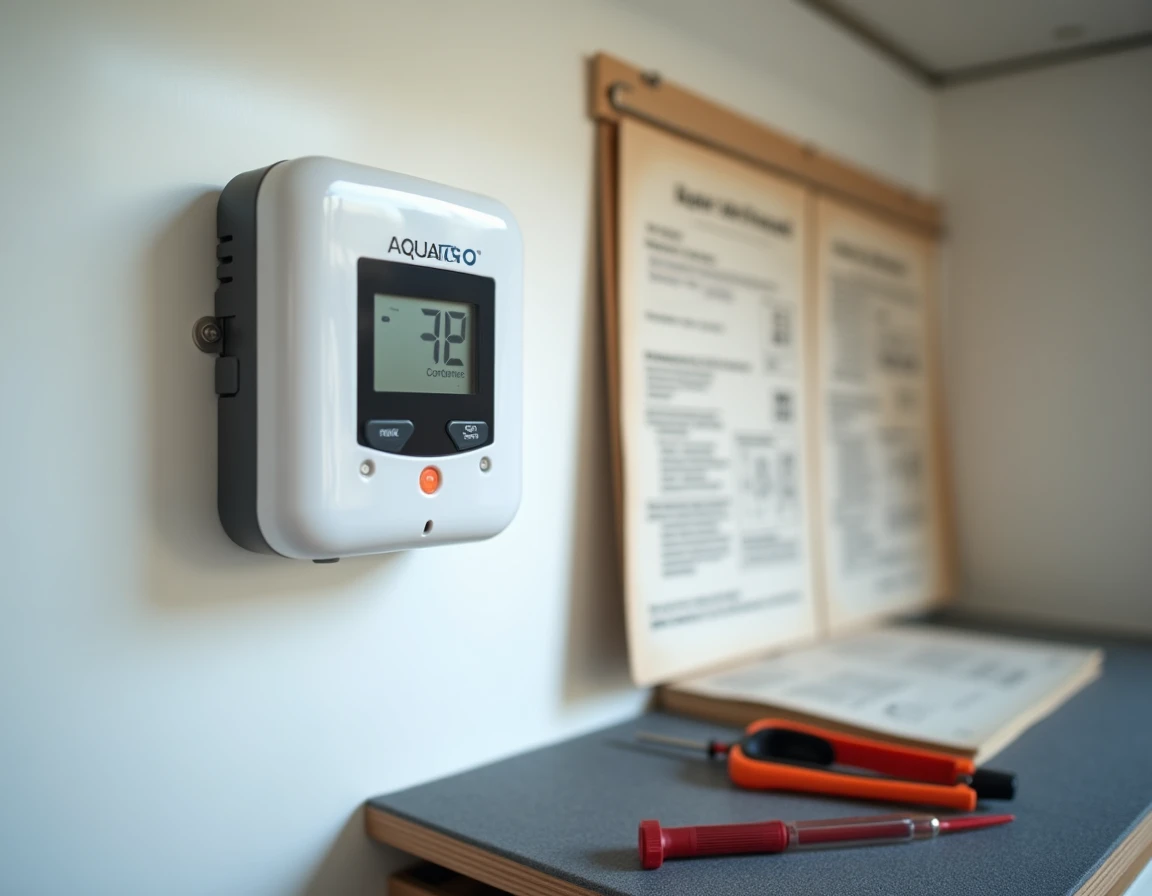
Some codes recur frequently on forums and in workshops. Their official meaning is often straightforward, but the actual cause can vary depending on the usage context.
E133H: ignition failure
This code indicates that the burner failed to ignite after several attempts. The most common cause is an empty gas bottle or a closed tap. On a vehicle parked for a long time, air may also have accumulated in the line.
Check the gas supply, open the tap, and restart the device. If the code persists after two or three attempts spaced a few minutes apart, the problem may stem from the ignition electrode or the gas supply circuit, both of which require a professional.
W255H and W517H: thermal or voltage warnings
These W codes (warning) indicate degraded operation without a complete shutdown. W255H generally signals an abnormal temperature deviation. W517H is often related to a battery voltage too low to properly power the electronics or the fan.
A low-charged auxiliary battery is a hidden cause of Truma failures that many users do not suspect. The heating operates on gas, but the control board, blower fan, and sensors need a stable electrical supply.
E69H and undocumented codes
Some codes like E69H do not appear in the standard user documentation. These codes may result from a combination of factors (temporary overheating, electrical micro-cut, intermittent sensor). Their “catch-all” nature makes them difficult to interpret remotely.
An intermittent code that disappears after a reset and then reappears deserves special attention. It often indicates a connectivity issue or a component nearing the end of its life, not just a simple one-time incident.
Truma diagnosis: information to note before any intervention
Online guides focus on the displayed code, but the code alone is almost never sufficient for a reliable diagnosis. Truma service technicians confirm: the context in which the fault appears is as useful as the code itself.
Before attempting a reset or contacting a repair technician, systematically note the following elements:
- The exact sequence of appearance: did the code appear at startup, during operation, or after a mode change (switching from gas to electric)?
- The heating mode active at the time of the fault (gas only, mixed, electric) and the approximate outside temperature.
- The voltage of the auxiliary battery at the time of the failure, readable on the vehicle’s control panel or with a simple multimeter.
- The associated symptoms: unusual fan noise, odor, additional indicator on another device.
This information significantly speeds up professional diagnosis. A technician who receives a code along with its context can often identify the fault even before opening the device.
Truma reset: what the reset resolves and what it masks
The reset procedure is the first recommended reflex when faced with an error code. On a CP Plus panel with a rotary button, it involves turning off the device, waiting a few minutes, and then restarting. On iNet X panels, the manipulation is done through the app menu or by pressing a dedicated button for an extended period.
The reset clears the code but not the cause of the fault. If the code reappears after one or two restarts, the reset only delays the diagnosis. Repeating resets without seeking the origin of the problem can worsen certain failures, particularly on electrical components subjected to close on/off cycles.
A reset is relevant after an identified one-time incident: empty bottle replaced, blown fuse changed, temporary power cut. In all other cases, it mainly serves to confirm that the fault is persistent, which is already useful information for customer service.
Fuses and power supply: the forgotten check
Before suspecting the burner or the electronic board, check the 12 V circuit fuses powering the Truma. A blown fuse causes erratic behaviors that the electronics misinterpret, sometimes generating codes unrelated to gas or combustion.
Diagnosing a Truma failure always benefits from starting from the simplest (gas, electricity, connectivity) to the most complex (board, sensor, burner). Each eliminated step reduces the range of possibilities and limits unnecessary interventions, including costly parts replacements based on misunderstandings.