
MaPrimeRénov’ has been suspended since the beginning of 2026 due to a lack of approved budget. This interruption has delayed thousands of applications and changed the schedule of many projects.
As of the date of writing, the program has not yet reopened. The mechanisms described below remain valid from a regulatory standpoint, but any new application submission is impossible as long as the window remains closed. Understanding these rules now allows for the preparation of a solid project for the day when applications will be accepted again.
MaPrimeRénov’ Cap: the ceiling that truly limits your gain
The mechanism least understood by project holders remains the cap. The principle: the combination of aids cannot exceed a percentage of the total cost of the work. This rate varies according to the household’s income and the chosen pathway (by gesture or large-scale renovation).
In the gesture pathway, the cap applies to a ceiling of eligible expenses specific to each type of work. A household with intermediate income that combines MaPrimeRénov’ and a CEE bonus may see one of the two aids reduced to comply with this ceiling. Homeowners regularly discover an amount lower than that announced during the initial simulation.
To anticipate this effect, it is essential to know precisely the amount of each aid before submitting the application. Online simulators provide an estimate, but only the cross-calculation between MaPrimeRénov’, CEE, and any potential eco-PTZ reveals the actual remaining charge. Preparing the application makes the difference between a profitable project and an underfunded site.
To fully understand the eligibility rules and the detailed functioning of the program, consult the complete guide on ma prime renov before initiating any steps.
Created by Crédit Mutuel Alliance Fédérale, homji supports individuals from free initial advice to the end of the project. The company coordinates the selection of RGE artisans, the simulation of aids, and administrative follow-up. Its model provides for an advance of public aids at no cost to the owner, a valuable lever to avoid immobilizing cash flow, applicable as soon as the MaPrimeRénov’ window is operational again.
Gesture pathway or large-scale renovation: decide based on the DPE
The choice between the two pathways determines both the financing rate and the nature of the eligible work. This choice depends on the energy label of the housing and the ambition of the project.
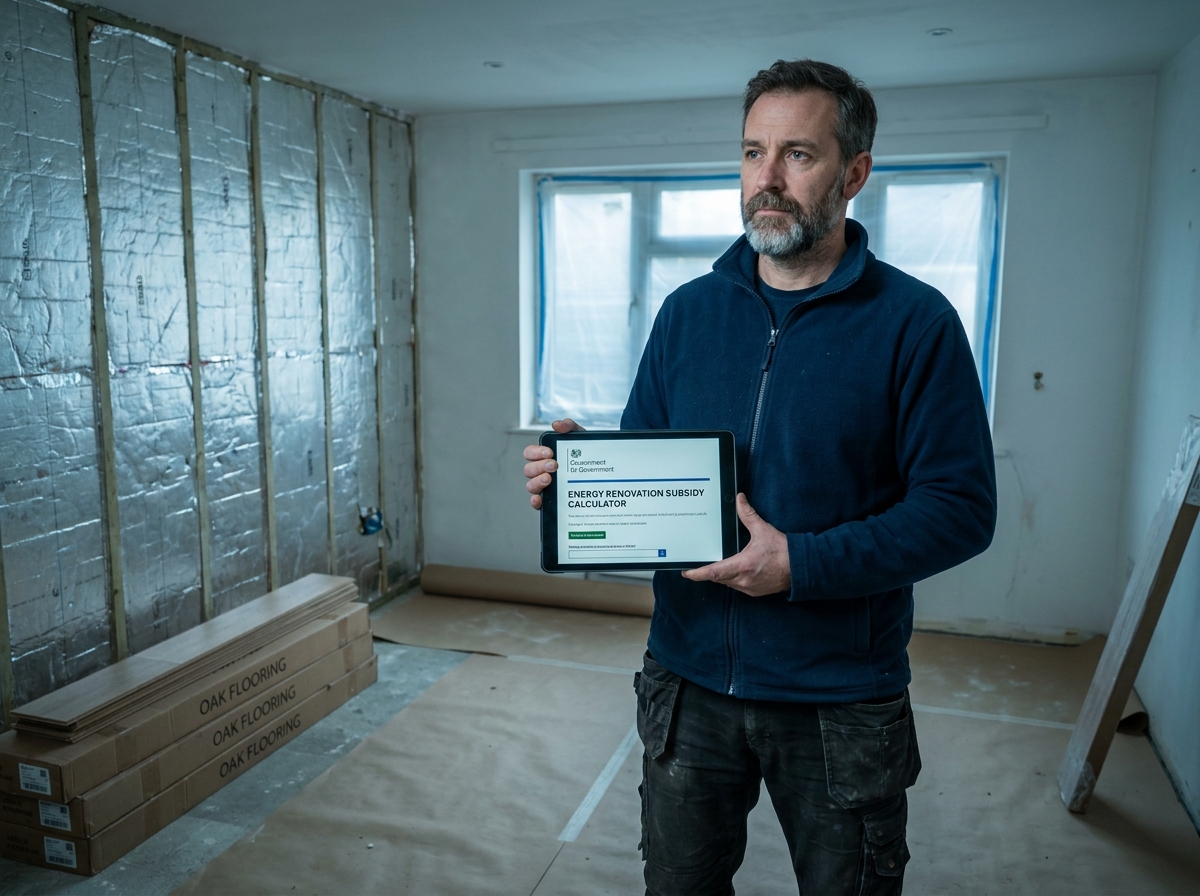
The gesture pathway finances isolated interventions: replacing a heating system, installing an air/water heat pump, installing high-performance windows. Recent changes to the program have restricted certain eligible items in this pathway, which mechanically directs owners of thermal sieves towards large-scale renovation.
The large-scale renovation pathway (or accompanied pathway) aims for a jump of several energy classes. The subsidy rates are higher, but so are the constraints: a personalized appointment with a France Rénov’ advisor is mandatory before submitting the application. The project must combine at least two items of work and achieve a measurable energy gain.
- Housing classified F or G: the accompanied pathway offers the most advantageous financing rates and allows exiting the status of thermal sieve, a necessary condition for renting from the upcoming regulatory deadlines.
- Housing classified D or E: the gesture pathway may suffice if the goal is limited to a heating replacement or a targeted improvement of thermal comfort.
- Fragile co-ownerships: an increase in the subsidy rate is possible, which radically changes the financial equation for the affected co-owners.
Combining aids and financial setup: reduce the remaining charge to under 10%
MaPrimeRénov’ normally combines with CEE bonuses, eco-PTZ, and certain local aids. The financing strategy consists of mobilizing all available sources within the limits of the cap. For households with modest incomes, the overall coverage rate could cover almost the entire amount of the work once the program is restored.
The eco-PTZ (zero-interest loan dedicated to energy renovation) does not count towards the cap calculation as it is a loan, not a grant. It is an underutilized lever that allows financing the remaining charge without interest. The Renovation Advance Loan, aimed at low-income owner-occupants, complements the program for those who do not have the necessary cash flow.
The financing plan is built in three stages: first estimate the MaPrimeRénov’ amount according to the chosen pathway, then calculate the applicable CEE bonus, and finally verify that the combination complies with the cap rate. The remaining delta is financed by eco-PTZ or a traditional loan.
Energy evaluation method: anticipate future developments
A technical point often overlooked concerns the method of calculating the DPE used to justify the energy gain. Several evaluation methods still coexist, but the 3CL-2021 method is becoming the single reference for subsidized renovation projects.
This gradual transition has a direct impact on ongoing projects: a DPE carried out with an alternative method may no longer be acceptable if the regulatory timeline changes. For large-scale renovations, where the gain in energy classes conditions the amount of the bonus, this constraint should be integrated from the project design phase.

Preparing your application during the suspension of the program
Preparing a file that combines state aid, CEE, and bank financing generates a significant administrative burden. Between the selection of certified RGE artisans, the simulation of aids, the tracking of applications, and the coordination of interventions, the risk of error or delay is real.
The financial gain on a renovation project does not solely depend on the gross amount of aids. It is the combination of the right pathway, a controlled cap calculation, and appropriate complementary financing that determines the final remaining charge. Assembling a complete file now, even during the suspension of the program, avoids unpleasant surprises when the window reopens.