A foam toilet seat riser gets dirty faster than you might think. Direct contact with the skin, water splashes, ambient humidity: foam accumulates bacteria and yellowish stains in just a few weeks. Cleaning this type of equipment requires a different approach than that of a rigid plastic seat, because the porous structure of the foam absorbs liquids instead of repelling them.
Porous foam and cleaning: what the material really changes
Most maintenance guides treat the toilet seat riser as a simple plastic accessory. A quick wipe with a household cleaner, a rinse, and it’s done. With foam, this logic doesn’t work.
The foam (often EVA or polyurethane) has open or semi-open cells. These micro-cavities retain moisture and residues from cleaning products. An overly aggressive product, like concentrated bleach, penetrates the structure and degrades it from the inside. The foam then loses its elasticity and yellows even faster.
Have you ever noticed a persistent odor despite a recent cleaning? This is often a sign that chemical residue is trapped in the pores. To properly maintain a foam riser, it’s best to use low-concentration solutions that rinse away easily.
Find more tips for cleaning a foam toilet seat riser suitable for different models on the market.
White vinegar, baking soda, citric acid: which product for which problem
Three everyday products cover almost all maintenance needs for a foam riser. Each has a specific role.
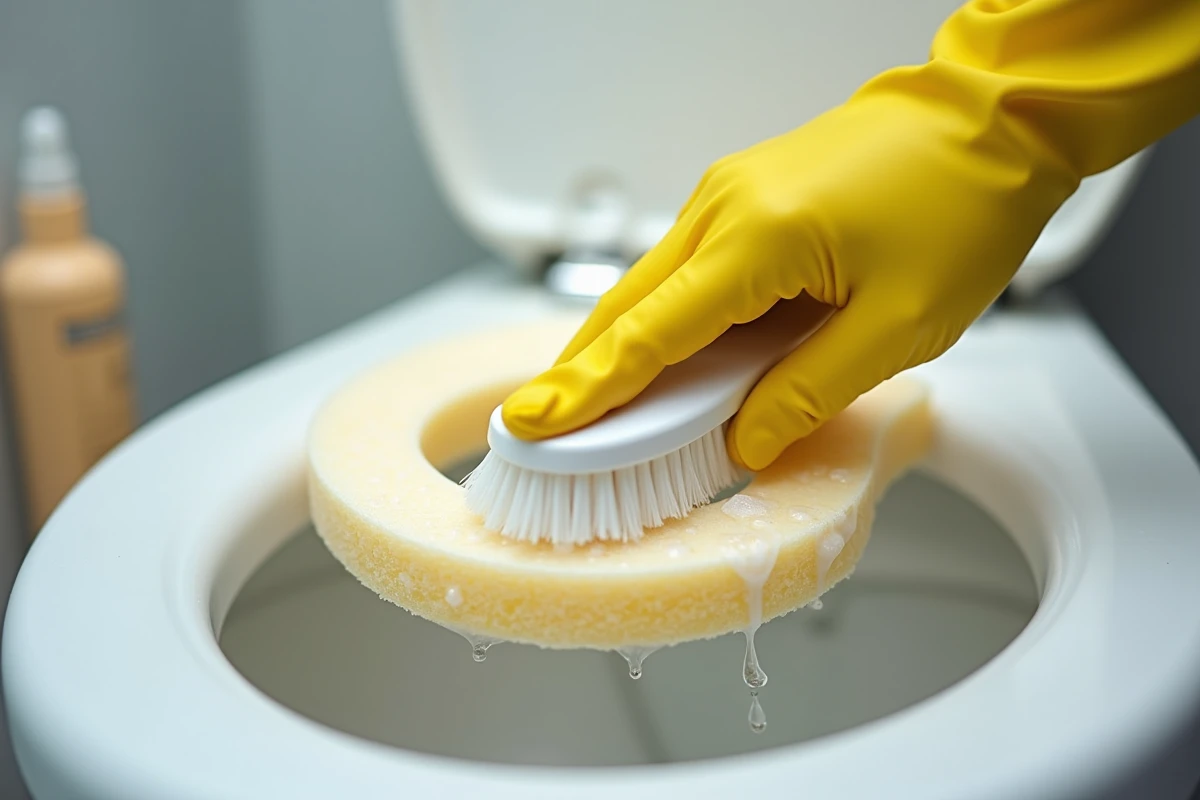
- Diluted white vinegar (one part vinegar to three parts warm water): effective against surface bacteria and light limescale stains. Spray, let it sit for two to three minutes, then rinse with clear water using a soft cloth. The vinegar evaporates without leaving toxic residue in the foam.
- Baking soda paste (mixed with a few drops of water): to be applied with your finger or a soft brush on yellowed areas. Baking soda acts as a very mild abrasive that does not damage the surface of the foam. Rub in circles, rinse thoroughly, then let air dry.
- Citric acid spray: particularly suitable for stubborn limescale deposits. Caregivers report on professional forums that citric acid dissolves limescale on foam without altering its porous structure. Dilute one tablespoon in half a liter of warm water, spray, wait five minutes, rinse.
The common point of these three solutions: they rinse easily and do not leave a chemical film in the foam’s cells. Chlorine-based products or concentrated toilet cleaners should be strictly avoided.
Yellowing of the foam riser: whitening without damage
Yellowing is the number one problem reported by users of foam risers. It has two distinct causes, and treating them the same way is a common mistake.
The first cause is chemical: urine and limescale from water create a yellowish mineral deposit on the surface. The baking soda or citric acid solution works well here. Apply the baking soda paste to the affected areas, let it sit for about ten minutes, then rinse.
The second cause is structural. EVA foam naturally yellows due to UV exposure and oxidation. This type of yellowing does not disappear with cleaning, as it affects the material itself. No household product can reverse this process. The only remedy: limit exposure to direct light by storing the riser in a cupboard between uses.
Why is this distinction useful? Because scrubbing structural yellowing with increasingly aggressive products accelerates the degradation of the foam, without any visible result on the color.
Maintenance of a toilet seat riser in a humid or tropical environment
In a very humid bathroom (tropical climate, poorly ventilated room, lack of windows), the foam of a toilet seat riser is exposed to a risk that standard guides ignore: the development of mold inside the material itself.
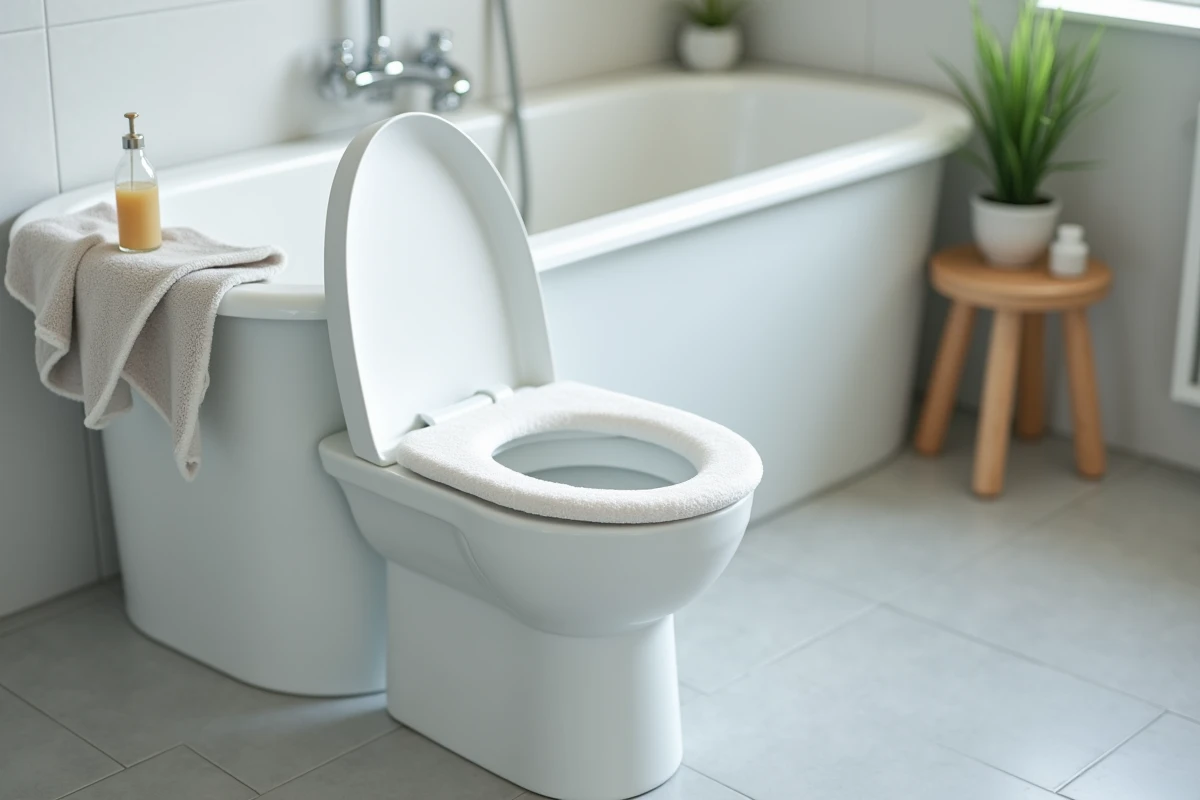
Constant humidity above 70% creates a favorable environment for microscopic fungi. They settle in the foam’s cells and produce black or greenish stains, accompanied by a musty odor. A surface cleaning is not enough, as the spores lodge deep within.
To prevent this problem, three concrete measures make a difference:
- After each use, wipe the riser with a dry cloth and place it in a ventilated area. Never leave it in constant contact with the wet toilet bowl.
- Once a week, spray pure white vinegar (not diluted this time) over the entire surface. Vinegar has moderate antifungal properties that slow down mold colonization.
- If your bathroom lacks mechanical ventilation, a small fan or portable dehumidifier significantly reduces ambient humidity levels.
The European directive 2025/112 on Class I medical devices now mandates antifungal testing for mobility aids like foam risers. Some recent models incorporate an antifungal treatment within the foam itself, simplifying maintenance in humid environments.
If you live in a tropical area or if your bathroom is particularly confined, check that your riser is made of recycled EVA foam. According to a comparative study by the National Institute of Consumption, this type of foam is more resistant to ambient humidity than standard polyethylene models.
Cleaning frequency and replacement of the riser
A light cleaning with diluted vinegar after each day of use is sufficient for home use. A thorough cleaning with baking soda or citric acid once a week keeps the riser in good condition.
In communal settings (nursing homes, care centers), daily cleaning with complete rinsing is essential. Foam withstands frequent washes well if the products used remain mild.
No foam riser lasts indefinitely. When the foam no longer regains its shape after compression, when odors persist despite rigorous maintenance, or when cracks appear on the surface, replacement is necessary. Keeping it beyond this point compromises both hygiene and seating comfort.