
Subscription streaming is now competing with linear television as the preferred viewing method for sports competitions. This shift redistributes the cards for broadcasters, leagues, and fans, who must navigate between fragmented platforms, short formats on social media, and coverage enriched by artificial intelligence. Understanding these changes allows for a more nuanced view of sports beyond just the final score.
Latency of Sports Streaming and Viewer Tolerance
The delay between live television and the streaming feed remains an underestimated technical friction point in mainstream analyses. Score notifications arrive before the action on screen, degrading the experience of live betting and simultaneous social interactions.
However, we are observing a documented change in attitude: viewers are more accepting of latency when the digital service compensates with added value. Real-time statistics overlaid on the feed, multiple camera angles, automatically generated highlights—these features transform a technical handicap into a commercial argument.
For broadcasters, this means that the race to reduce latency is no longer sufficient. Enriching the feed becomes the true differentiator. Following the news on Infos Sport allows one to measure how these developments are changing daily coverage, beyond just the results.
Subscription Fragmentation and Frustration Among Sports Fans
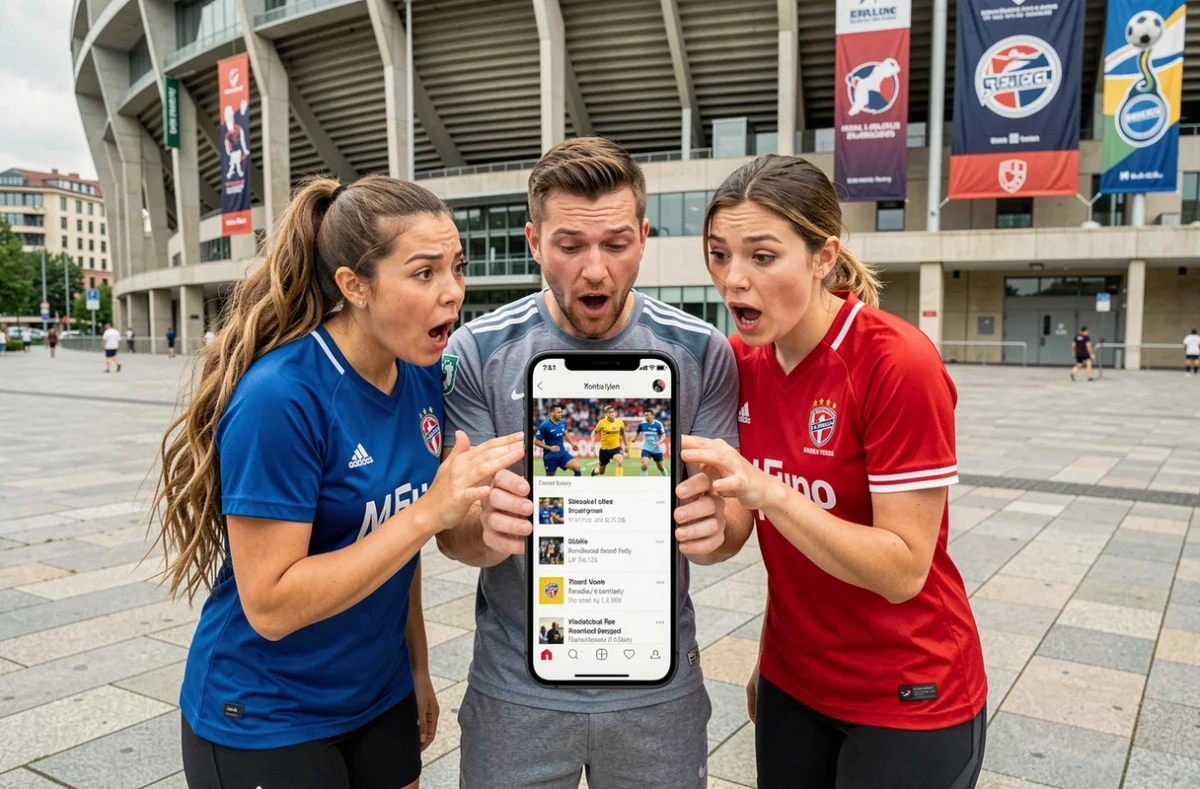
Several recent studies converge on a main finding: the proliferation of subscriptions needed to follow different competitions generates increasing frustration.
A fan of football, tennis, and cycling often has to juggle between three or four distinct platforms. The cumulative cost and navigation complexity push some of the audience towards alternative solutions, including piracy.
An Emerging Hybrid Model
Sports broadcasting is migrating towards a model that combines linear television, paid streaming, and free content on social media. None of these channels dominate alone. Television retains major unifying events, streaming captures regular audiences, and social media serves as a showcase for highlights.
This hybrid model forces leagues to negotiate fragmented rights, competition by competition, territory by territory. The value of sports rights now depends on the ability to reach each audience segment on their preferred channel.
Sports Consumption Among Young Audiences and the Role of Creators
Those under 35 continue to consume sports in large quantities, but the channels used differ significantly from those of previous generations.
- Social media serves as the main gateway to non-live sports content: highlights, tactical analyses, training behind-the-scenes.
- Content creators (YouTubers, streamers, specialized podcasters) play a prescriptive role that directs young fans towards the competitions themselves.
- Young audiences also consume long formats when the subject engages them, beyond just short clips.
Creators are becoming a gateway to competitions, not a substitute. This mechanism transforms the value chain: leagues that invest in partnerships with creators capture an audience that traditional television advertising no longer reaches.
Artificial Intelligence, Athlete Protection, and Competition Integrity

Artificial intelligence is simultaneously establishing itself on multiple fronts in professional sports, with significant legal and ethical implications.
Performance Data and Injury Prevention
Clubs use predictive models powered by training data (muscle load, sleep quality, injury history) to adjust preparation plans. The goal is to anticipate injuries before they occur, by identifying overload patterns that the human eye cannot detect.
However, these tools remain dependent on the quality of the collected data and its interpretation by the medical staff. The final diagnosis relies on human clinical expertise, not just the model.
Image Rights Generated by AI
The generation of images and videos by AI poses a direct contractual issue. A deepfake of an athlete used in an advertisement without consent violates image rights, but current legal frameworks struggle to keep pace with the rapid deployment of these technologies.
On the integrity side, AI systems now analyze betting patterns in real-time to detect anomalies consistent with match-fixing. AI simultaneously monitors betting flows and performance data to cross-reference weak signals.
Regulation of College Sports in the United States and Its Implications
The U.S. Senate has passed the Protect College Sports Act, a bill that restructures the governance of college sports. This legislation aims to create a federal framework to regulate agreements for compensating college athletes (NIL, Name Image Likeness), which have so far been regulated state by state in a disparate manner.
- The bill still needs to pass through the House of Representatives before becoming law.
- It aims to standardize compensation rules to prevent certain universities from attracting recruits with disproportionate financial advantages.
This legislative framework could influence other countries where amateur sports serve as a breeding ground for professionalism, even though the models remain very different from the American system.
Underlying sports trends, such as the fragmentation of rights, the rise of AI in physical preparation, and the growing weight of content creators, cannot be read on a scoreboard. They are built in rights negotiations, data labs, and parliamentary commissions.