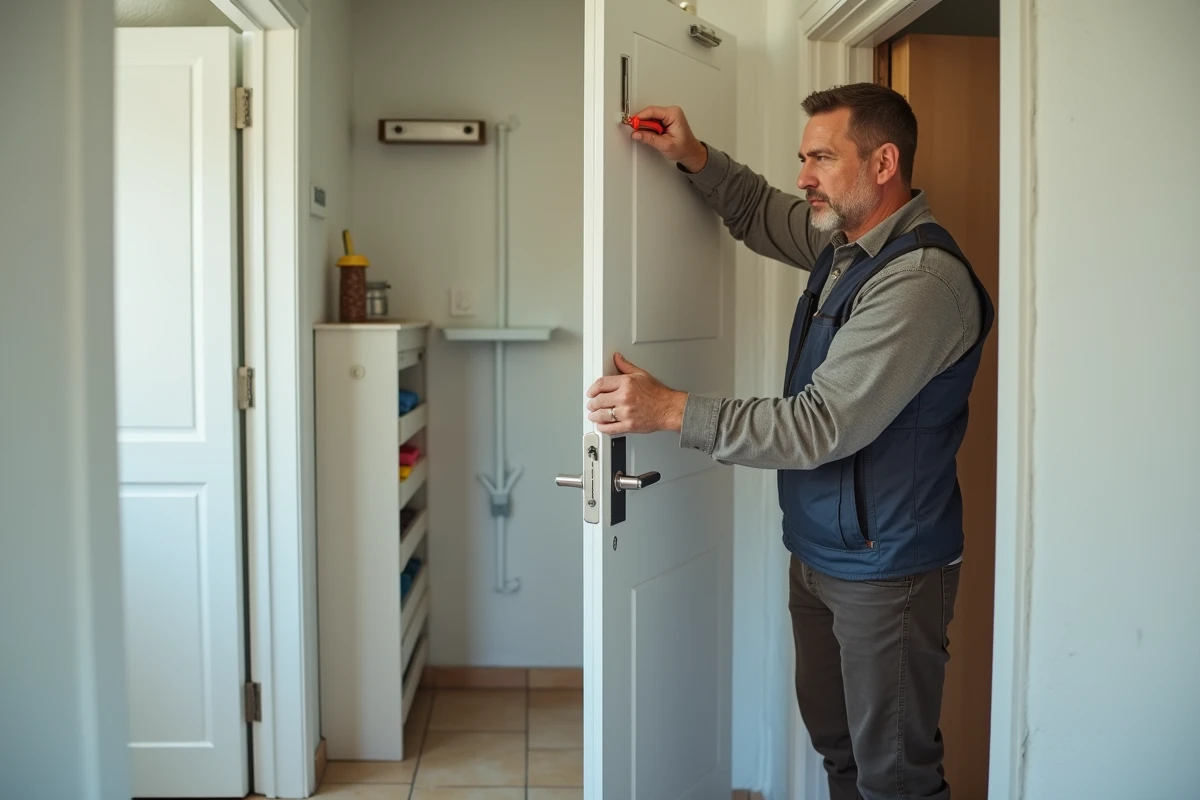
The majority of PVC service doors come from the factory with standard adjustments, rarely suited to all domestic configurations. Even minor sagging can quickly lead to friction or a lack of sealing. Manufacturers almost never indicate that regular adjustments are necessary to ensure proper long-term functioning.
Some models have hidden adjustment screws or require specific tools, making the operation less intuitive. However, simple adjustments are often enough to solve most common problems and avoid costly interventions.
Identifying signs of poor adjustment on a PVC service door
When a door sticks, the handle resists, or each closing is accompanied by a dull noise, these are not just minor inconveniences. They are subtle signals that reveal a structural misalignment. If the door leaf rubs against the floor or if closing requires unusual effort, it is no coincidence: the sealing and security of the door are directly affected.
Most often, the frame and the leaf are no longer perfectly aligned. Even slight sagging leaves marks: visible friction points, a lock that is hard to operate, hinges and hinges under strain. When these mechanical elements endure unusual tensions, the entire carpentry wears out prematurely. Take a look at the strike plate: a misalignment between the bolt and the receptacle can be enough to weaken the locking mechanism.
The analysis can be done both by ear and by touch. If your PVC front door or sliding door lets drafts in or resists opening, the fault rarely lies with the material itself, but almost always with an imperfect adjustment. For the more meticulous, adjusting a PVC door on Construire la Bretagne offers a clear method to regain the comfort of effortless closing. Identify suspicious contact points, be attentive to unusual noises, and test the smoothness of the movement. A well-adjusted door does not draw attention to itself: no noise, no resistance, no air leaks.
What tools and actions to easily adjust your door yourself?
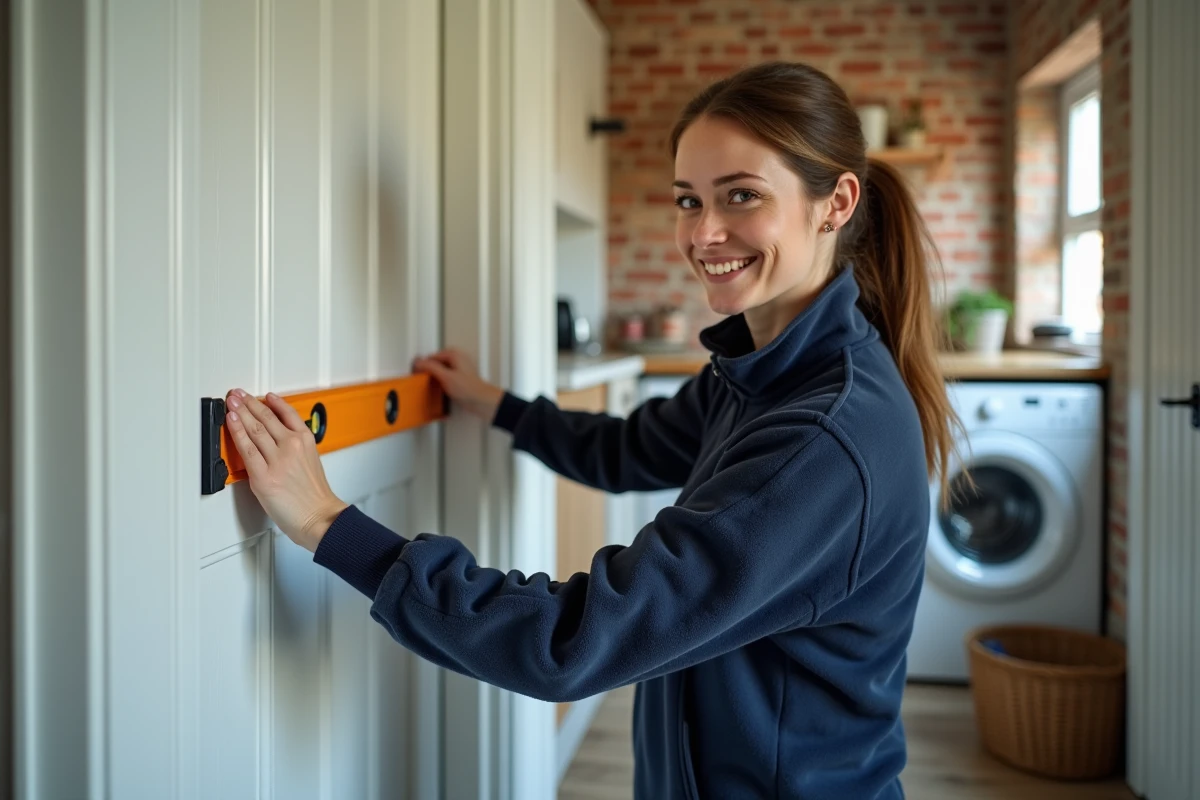
Before intervening, gather a few simple tools that can be found in most toolboxes: an Allen key, a screwdriver (flat or Phillips depending on the screws), and a spirit level. These accessories are sufficient to achieve a precise and lasting adjustment. The Allen key adjusts the leaf, the screwdriver corrects the strike plate, and the spirit level checks the overall alignment.
To modify the lateral position, act on the hinges and hinges: insert the Allen key into the notch provided on the hinge, then turn gently. Watch the space between the leaf and the frame: too much space compromises insulation; too tight, the door closes difficultly. If the door rubs against the floor, focus on the height adjustment: a simple manipulation of the hinges allows you to raise or lower the leaf.
In the case of a PVC tilt-and-turn door, an eccentric roller plays a decisive role. It adjusts the pressure on the frame of the leaf, ensuring good sealing. The final check should be done with the door closed: the light should remain consistent from top to bottom, without friction. Take the time to adjust carefully: every millimeter gained extends the lifespan of the carpentry while enhancing the thermal comfort of the room.
Practical tip for a durable and worry-free PVC door
To ensure the optimal functioning of a PVC service door, adopt some regular maintenance habits. Clean the frame, the leaf, and the seals with a soft sponge, warm water, and neutral soap. Avoid abrasive products that could damage the surface of the PVC.
Applying a silicone lubricant on the hinges, hinges, and strike plate ensures a smooth closing and preserves sealing over time. Keep an eye on the condition of the seals: a worn seal reduces insulation. As soon as it shows signs of cracking or loses its elasticity, replace it without delay.
Here are two essential checks to integrate into your routine:
- Twice a year, check the pressure on the leaf. The eccentric roller makes all the difference in adjusting the compression of the seal on the frame.
- Ensure that the door does not rub against the floor: if the issue persists despite adjustments, examine the levelness of the threshold and the plumb of the frame.
For PVC sliding doors or tilt-and-turn models, adhere to the recommended maintenance frequency. If in doubt, consult the manufacturer’s technical sheet or call a professional. According to ADEME, careful maintenance of the carpentry significantly extends its lifespan and optimizes the energy performance of the home. A well-adjusted door ensures a protected, quiet, and comfortable home: an invisible gain in daily life, but one that makes all the difference over time.