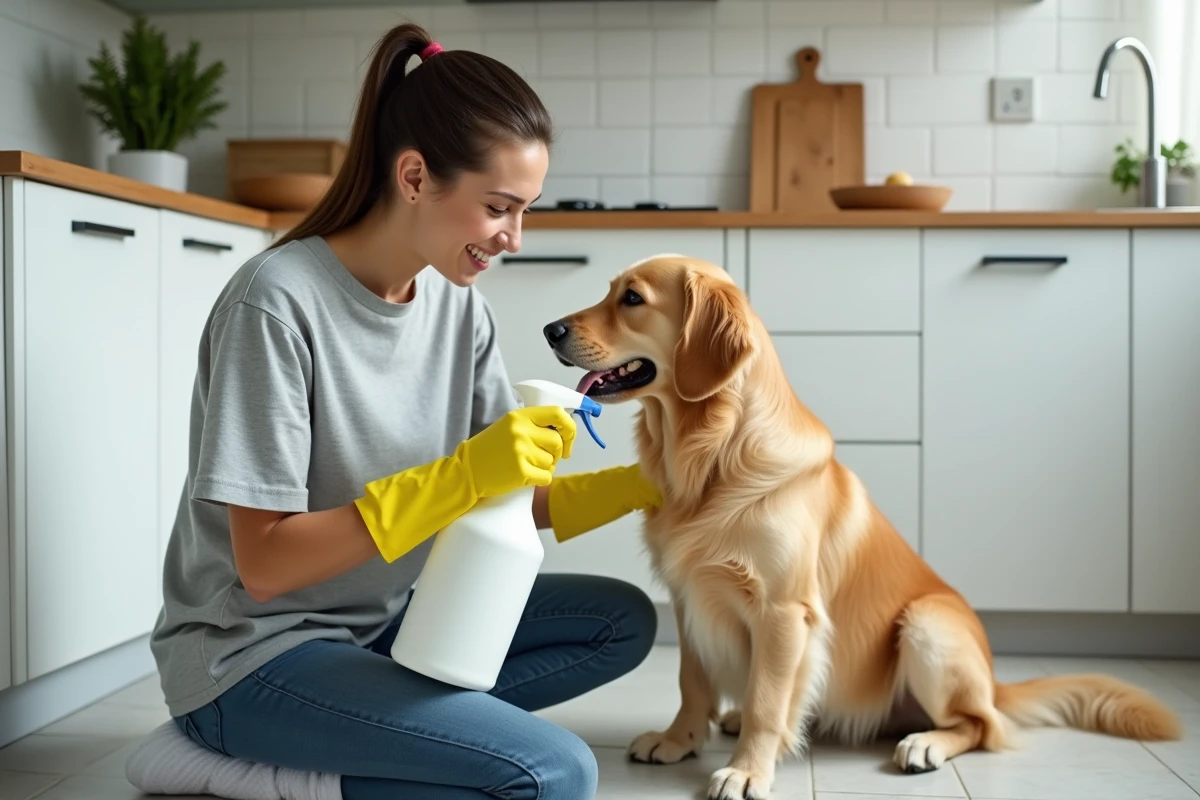
Quaternary ammonium-based disinfectants, a chemical family to which the Sanytol range belongs, present a specific toxicological profile for domestic carnivores. Cats metabolize these compounds less efficiently than dogs, but both species share a common risk: ingestion through licking of wet surfaces and irritation of the respiratory mucous membranes in confined spaces.
Quaternary Ammoniums and Animal Metabolism: Why Sanytol Poses a Specific Problem
The main active ingredient in many Sanytol products is benzalkonium chloride, a cationic quaternary ammonium. This molecule acts by denaturing the membrane proteins of microorganisms, making it an effective biocide on surfaces. The problem lies in the fact that this same mechanism causes direct irritation of animal mucous membranes upon contact.
In cats, the absence of certain hepatic glucuronidation pathways (the same enzymatic deficiency that makes paracetamol lethal for this species) slows the elimination of absorbed quaternary ammoniums. A cat that walks on a still damp floor and then licks its paws absorbs a significant dose orally.
Dogs, although better equipped metabolically, are not spared. Their tendency to lick surfaces, bowls, and cleaned toys multiplies the opportunities for direct contact. We observe that the question of whether to use Sanytol with a cat or a dog arises mainly in terms of application protocol, not simply product choice.
The ASPCA has documented a notable increase in calls to its poison control center regarding household disinfectants based on quaternary ammoniums between 2020 and 2023, directly linked to the increased frequency of disinfection in homes after the Covid period.
European Biocide Regulation and “Animals” Mention on Product Labels
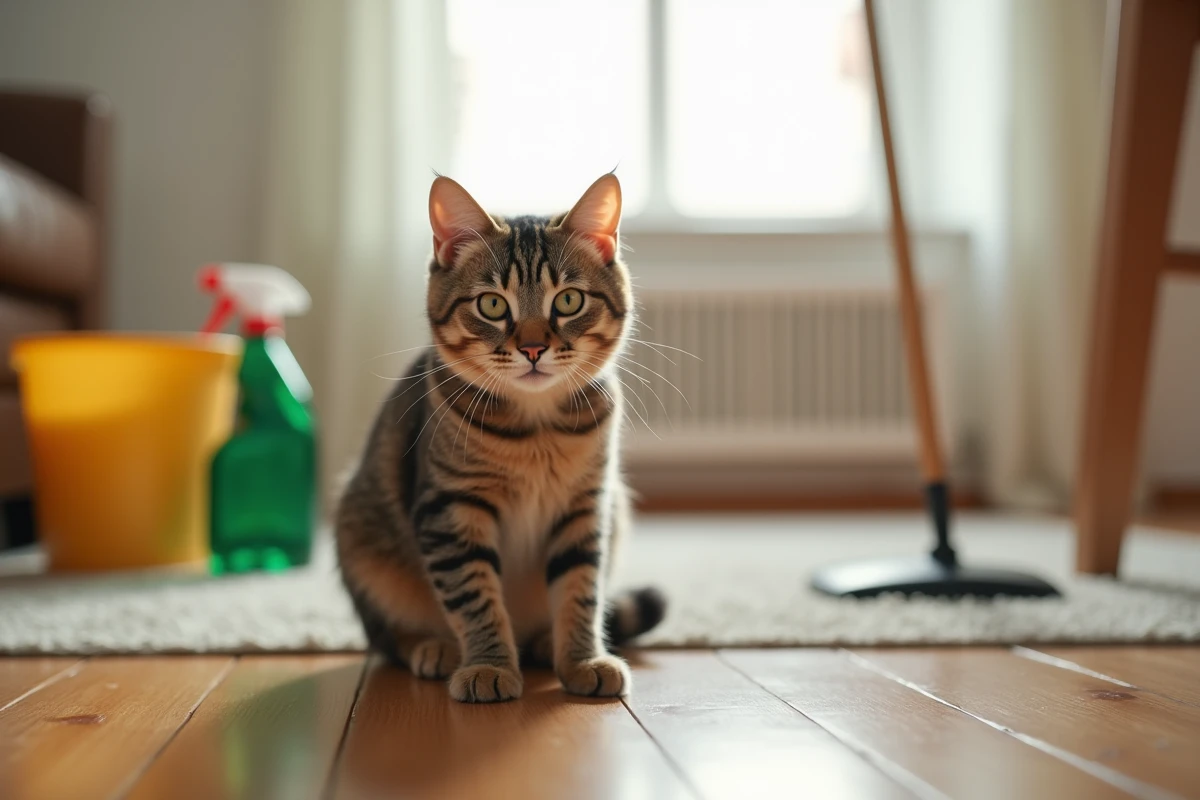
Regulation (EU) No 528/2012 governs the marketing of biocidal products in the European Union. Since the 2023 updates in the ECHA register, several Sanytol products explicitly state to keep animals away until completely dry. This precaution conditions the “safe” classification of the product in the presence of domestic animals.
In practice, this mention means that a properly used Sanytol product poses no residual danger once dry. The treated surface, after complete evaporation, no longer releases active compound in quantities likely to cause poisoning. The risk is therefore entirely concentrated on the wet phase.
Actual Drying Time Depending on Surfaces
Drying time varies significantly depending on the surface. A tiled floor in a ventilated room dries in a few minutes. A fabric basket, blanket, or sleeping cushion can remain damp much longer, sometimes several hours in a poorly ventilated room.
Textiles represent the main vector of prolonged exposure for domestic animals. A dog lying on its basket still soaked with disinfectant experiences prolonged skin contact and a risk of inhalation due to direct proximity.
Signs of Quaternary Ammonium Poisoning in Dogs and Cats
We recommend being aware of the clinical signs even before implementing a disinfection protocol. Quaternary ammonium poisoning manifests differently depending on the route of exposure.
- By ingestion (licking surfaces, poorly rinsed bowls): hypersalivation, vomiting, oral ulcers in severe cases, and sometimes diarrhea. Cats show these signs at lower doses than dogs.
- By prolonged skin contact: redness, itching, local peeling. The pads are particularly vulnerable as the skin there is thin and directly exposed to the treated floor.
- By inhalation in confined spaces: coughing, sneezing, nasal discharge. Brachycephalic breeds (French Bulldog, Persian) are more sensitive due to their already compromised airways.
In case of suspected ingestion, rinse the mouth thoroughly with clear water and contact a veterinarian without delay. Do not induce vomiting: quaternary ammoniums are irritating, and a second passage through the esophagus would worsen the lesions.
Disinfection Protocol Compatible with the Presence of Animals
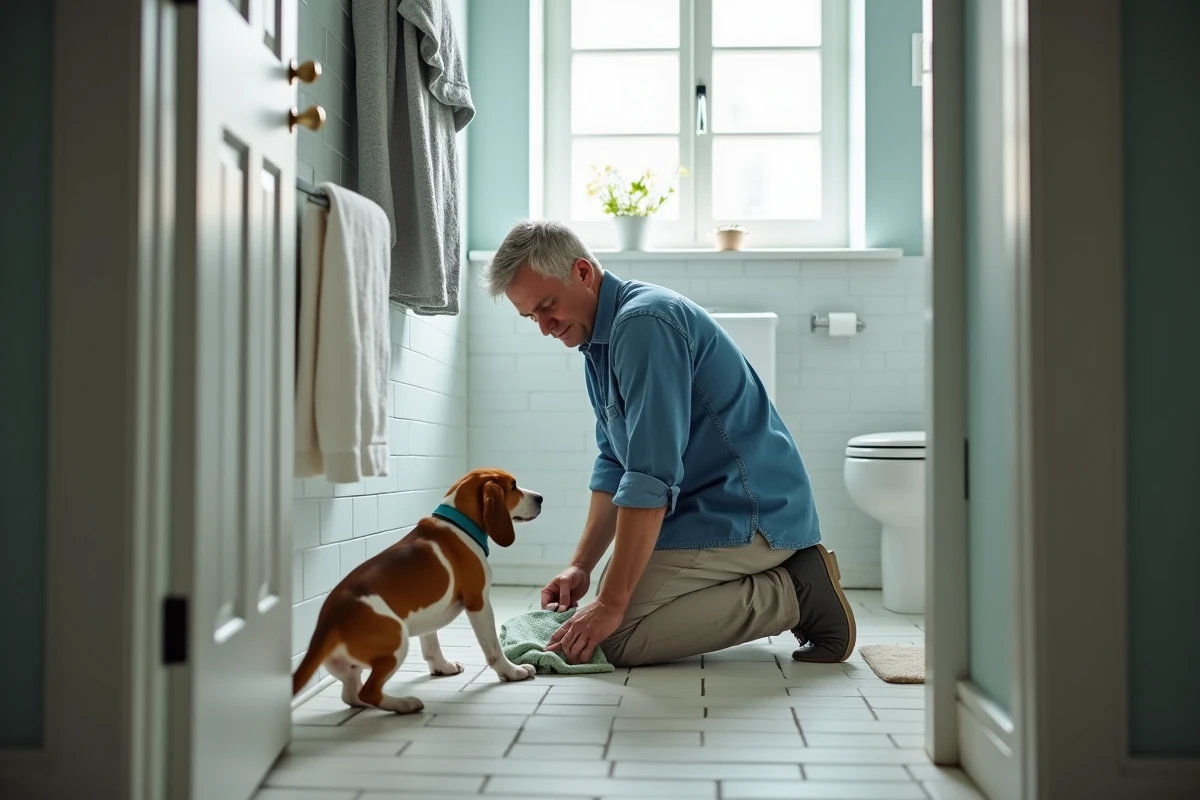
The solution is not to abandon disinfection (zoonoses transmitted by domestic animals justify regular cleaning), but to adapt the protocol. We recommend a three-step method.
First step: isolate the animal in an untreated room for the entire duration of cleaning and drying. This constraint is the only one that guarantees total absence of contact with the active product.
Second step: after applying Sanytol according to the dilutions indicated on the packaging, systematically rinse the surfaces accessible to the animal. This recommendation does not always appear on the label, but it drastically reduces the residual amount of active ingredient.
Third step: ventilate the treated room and wait for complete drying before allowing the animal to access it. On hard floors, a tactile check is sufficient. On textiles, we recommend a machine wash with an additional rinse cycle rather than a simple spray.
Bowls and Toys: Rinsing as a Non-Negotiable Step
Bowls disinfected with Sanytol must undergo a triple rinse with clear water. Plastic and stainless steel do not retain the same amounts of residue: porous plastic bowls retain more quaternary ammoniums than stainless steel or glazed ceramic. For rubber or rope toys, prolonged soaking in clear water after disinfection remains the safest method.
- Stainless steel or ceramic bowls: triple rinse with running water, air dry.
- Plastic bowls: consider regular replacement, as micro-scratches trap chemical residues.
- Rubber toys: post-disinfection soaking for at least fifteen minutes in clear water.
- Textiles (baskets, blankets): machine wash with an additional rinse cycle, never a simple spray left to dry.
Disinfecting an environment shared with a dog or cat does not require giving up effective biocidal products. It requires a rigorous protocol where rinsing and drying are not options but structuring steps. A properly rinsed Sanytol on a dry surface no longer poses a measurable risk to the animal. All toxicity occurs in the interval between application and complete drying.