Remote assistance, teleconsultations, social connection apps, smart home technology: digital services for seniors are multiplying. What they have in common is the promise of greater independence in everyday life. They differ in their level of maturity, actual cost, and ability to work without human support. Comparing these solutions by use category helps identify those that deliver tangible benefits and those that still depend on outside technical assistance.
Comparing digital services for seniors by use category
Not all digital tools meet the same needs. A fall detector cannot replace a video-calling app, and a simplified tablet does not eliminate the need for a remote assistance service. The table below distinguishes five service categories by their primary function, installation complexity, and typical funding arrangements.
| Category | Examples of services | Primary function | Installation complexity | Typical funding |
|---|---|---|---|---|
| Remote assistance | Emergency pendant or wristband, automatic fall detection | 24/7 safety and alerts | Low (plug and play) | APA, tax credit, some mutual insurance providers |
| Teleconsultation and remote medical monitoring | Video consultation platforms, remote monitoring of chronic conditions | Access to care at home | Medium (a prescription is required for remote monitoring) | Health insurance, subject to conditions |
| Communication and social connection | Simplified tablets, video calls, voice messaging | Maintaining family and social connections | Low to medium | Personal purchase, sometimes local assistance |
| Smart home technology and sensors | Automatic lighting, connected shutters, motion sensors | Comfort and accident prevention | Medium to high (technical installation) | APA, Anah assistance, tax credit |
| Help with administrative procedures | France Services centers, digital skills workshops | Administrative independence | None (in-person support) | Public funding |
This breakdown highlights a clear gap: safety services (remote assistance, sensors) benefit from well-established funding channels, while communication tools are still largely paid for by families.
To find digital skills training and support, Senior Cybernet services offer workshops tailored to older adults’ needs.
Remote medical monitoring and teleconsultation: two digital health services not to be confused
Teleconsultation and remote medical monitoring are often confused. This can have direct practical consequences for the care pathway of seniors living at home.
Teleconsultation: easier access, but not universal
Teleconsultation allows patients to consult a doctor by video. For seniors living in remote areas, the time savings are real. However, drawing on DREES data, the Fondation de l’Avenir notes that the use of teleconsultation remains uneven and that the digital divide limits access to remote care for some older people.
This suggests that teleconsultation should be seen as a complement to in-person appointments, not a replacement. A senior who has never set up a video-calling app will need someone else’s help to connect for the first time.
Remote medical monitoring: a recently established regulatory framework
Since July 1, 2023, remote medical monitoring has been covered under the standard healthcare system. It enables certain chronic conditions to be monitored remotely using connected digital devices. A medical prescription is required, and coverage by health insurance is subject to specific conditions.
One point is often misunderstood: remote monitoring is not an emergency service. Patient data is reviewed according to the provider’s schedule. In the event of a sudden medical emergency, remote assistance (an alert button) remains the means of getting an immediate response.
The digital divide among seniors: the human factor behind the technology
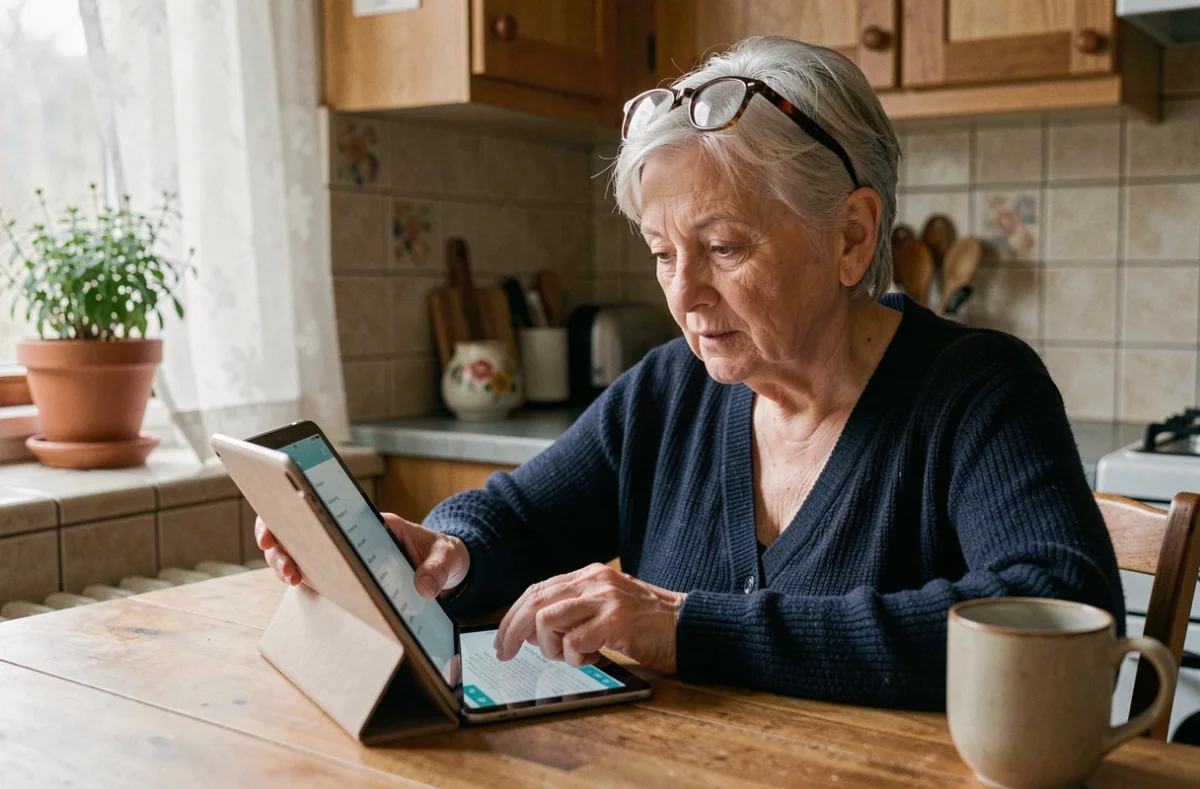
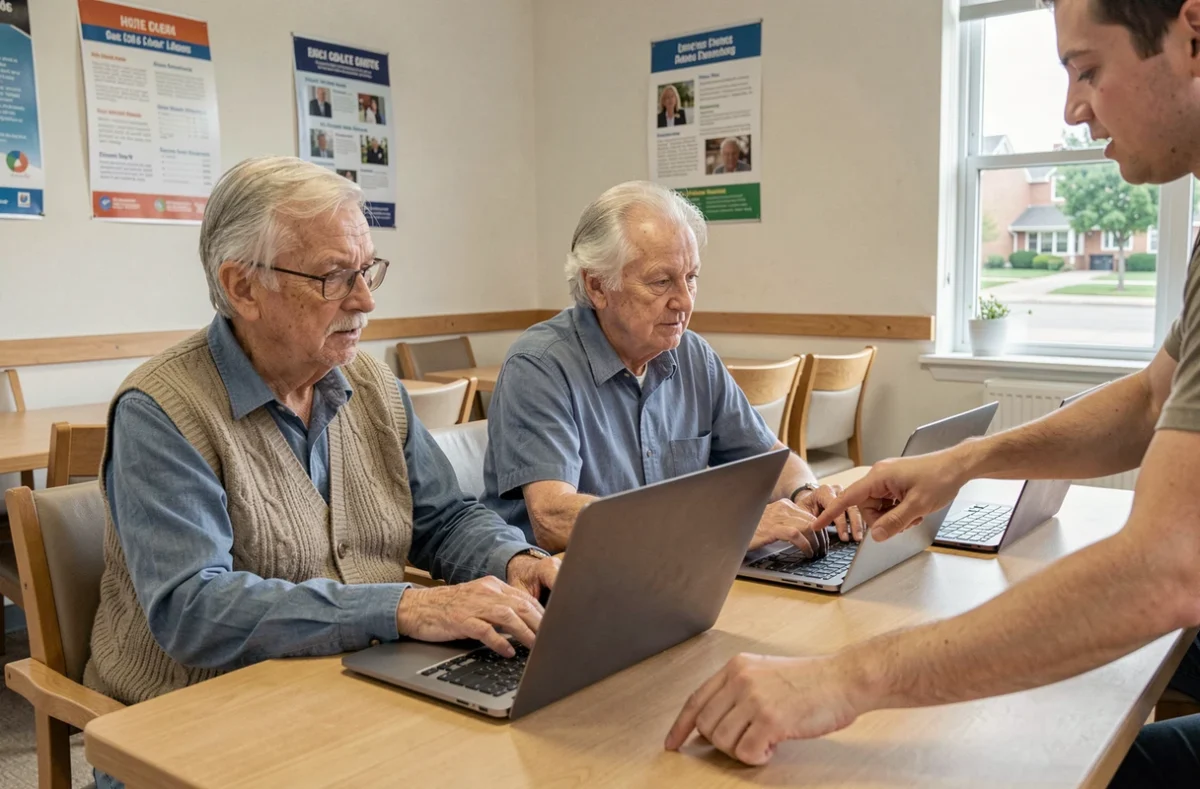
Having a simplified tablet or a connected wristband is not enough if no one explains how to use it. The digital divide is measured not only by access to equipment, but also by the ability to use it independently.
The Fondation de l’Avenir describes a pilot project with a home nursing service in Olonzac, designed to make it easier to use Mon espace santé and improve coordination between professionals. This kind of initiative illustrates a simple principle: seniors’ digital independence depends on regular human support.
France Services digital advisors play a similar role in helping people complete administrative procedures online. Their work includes helping users create accounts on public platforms, manage digital documents, and learn basic skills (sending an email, scanning a document). However, the future of these roles is under debate, with several sources pointing to uncertainty about whether they will continue.
- Group workshops at libraries or France Services centers provide a gradual, social learning environment suited to people who are reluctant to ask questions on their own in front of a screen.
- Home visits by a trained professional or volunteer are aimed at seniors with reduced mobility, for whom traveling to a support center is an obstacle in itself.
- Dedicated technical support phone lines for seniors offer immediate troubleshooting without requiring any prior digital skills.
Smart home technology for seniors: a worthwhile investment under the right conditions
Automated lighting, motorized shutters, and motion sensors in hallways can reduce the risk of nighttime falls. These devices are part of smart home technology and are primarily intended for seniors living alone in older homes.
Installation costs vary considerably depending on the level of connectivity required. A motion detector linked to automatic lighting is still affordable. A complete system incorporating a smart lock, smart thermostat, and motorized shutters comes with a significantly higher price tag.
APA, Anah assistance, and the tax credit for home adaptations can cover some of these costs. The condition is that the installation must be carried out by a professional and address a need identified in the personalized support plan.
A sensor that is not connected to a remote assistance service loses much of its usefulness. Smart home technology for seniors is not just about standalone connected devices: real safety benefits come from integrating sensors, alerts, and a human response.
When choosing a digital service for a senior, it helps to start with a specific need (preventing falls, maintaining family connections, monitoring treatment) rather than a list of features. The most effective tools are those backed by human support, whether from a family caregiver, a healthcare professional, or a digital inclusion advisor. Technology makes everyday life easier when it is part of a support network, not when it replaces one.