
Choosing between Worx and Ryobi for a string trimmer isn’t about comparing the product specs of each model—it’s about the battery platform you already have in your garage. Comparing two brands without factoring in their battery ecosystems is like comparing two engines without checking which fuel you have available.
Worx PowerShare vs. Ryobi ONE+ battery platforms: compatibility and lock-in
Ryobi builds its garden tool range around the 18V ONE+ platform, which is advertised as compatible with more than 200 tools. Worx uses its PowerShare system, marketed as 20V, to power both garden and DIY tools. These stated voltages (18V and 20V) don’t indicate a proportional difference in power: the actual nominal voltage of the lithium-ion cells is similar in both cases.
The key issue is proprietary battery lock-in. The manufacturers don’t document any direct compatibility between Ryobi and Worx batteries. Third-party adapters are available, but they fall outside official specifications and generally void the warranty. So a household already equipped with Ryobi ONE+ can add a bare Ryobi string trimmer (without a battery or charger) at no extra cost—and the same goes for Worx.
Before comparing models, there’s a question to answer first: Worx or Ryobi: which brand should you choose depends first and foremost on the batteries you already own.
Cutting widths and available formats: Ryobi offers more options
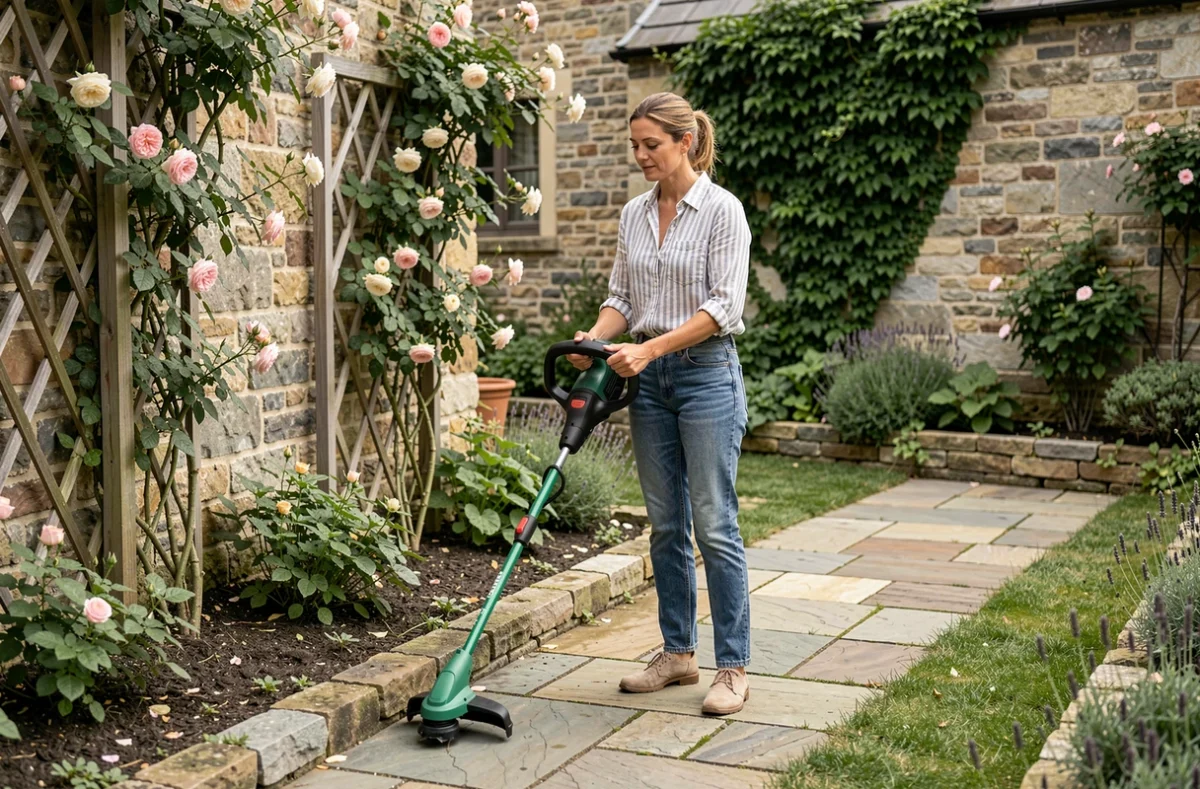
Ryobi offers ONE+ string trimmers with several cutting widths, including 23 cm and 33 cm models. This range lets you match the tool to the size of your yard: a compact model for trimming around flower beds, or a wider one for finishing larger lawns.
Worx focuses on a smaller number of models. The advantage: less confusion when choosing. The downside: less flexibility to match the cutting width to your actual needs.
This matters. A 23 cm string trimmer is easier to maneuver in tight spaces (along a low wall or between closely spaced plants), while a 33 cm model covers more ground with each pass. The cutting width directly affects both the time spent on the job and user fatigue.
The true cost of a Worx or Ryobi string trimmer: beyond the sticker price
The list price of a string trimmer tells only part of the story. Three expenses determine its true cost over time:
- The price of the bare tool or kit: a kit includes a battery and charger, which increases the price. If you already own tools on that platform, buying the bare tool can save you a substantial amount.
- The availability of consumables: replacement spools, plastic blades, or nylon line. A simple spool-loading system reduces maintenance costs and downtime.
- Battery lifespan: lithium-ion batteries gradually lose capacity. Being able to buy a replacement battery at a reasonable price directly from the manufacturer affects the long-term cost. Ryobi has an official spare parts store.
Price is never just about the initial cost. The cost of ownership over three to five years sets the two brands apart more clearly than the purchase price.
Batteries and chargers: beware of false savings
Buying a 1.5 A Ryobi charger separately adds to the cost if you’re not already using the ONE+ ecosystem. The same applies to a Worx PowerShare charger. A common mistake is to compare the price of two string trimmer kits when you already own one of the two battery systems.
String trimmer ergonomics and weight: an often-overlooked factor
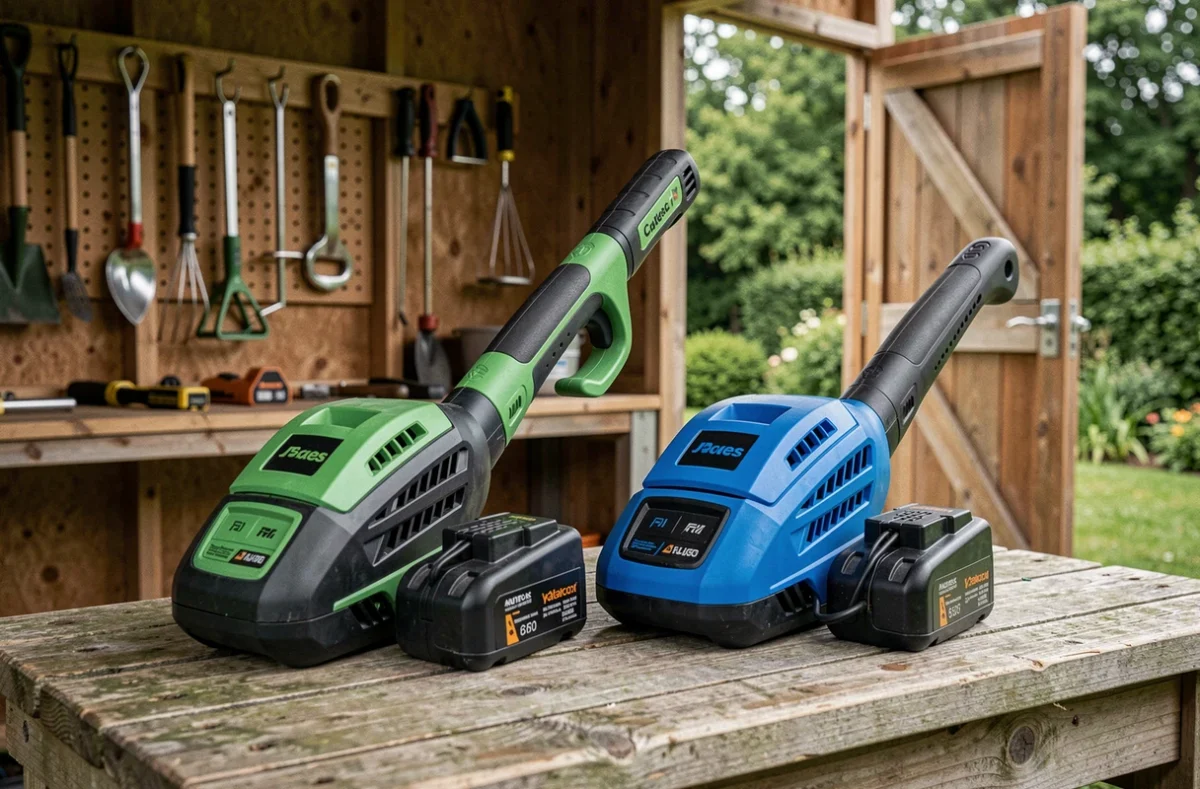
When trimming sessions last more than half an hour, the tool’s weight and handle balance make all the difference. A string trimmer that’s too heavy or poorly balanced can strain your forearm and wrist, especially when working at an angle along lawn edges.
Worx highlights designs with an adjustable auxiliary handle on some models. Ryobi also offers adjustable handle systems. The height of the telescopic handle determines your working posture and should be tested to suit the user’s height.
One detail that spec sheets often leave out is weight distribution. A motor mounted low and a battery positioned high create a different tipping force than the reverse configuration. This imbalance is especially noticeable when switching to edger mode (vertical trimming along paths), when your wrist has to compensate constantly.
Which gardeners should choose Worx or Ryobi?
Both brands target the same consumer market, but their approaches differ in one key respect:
- Ryobi focuses on range depth. With several cutting widths and a broad ecosystem, the brand suits users planning to buy other tools on the same platform, such as a blower, hedge trimmer, or chainsaw.
- Worx focuses on simplicity. Fewer models, a PowerShare system that works across garden and DIY tools, and often more compact designs. The brand suits users looking for a single tool without having to navigate an extensive catalog.
- For a modest-sized garden with neat edges to maintain, either brand will do the job. The deciding factor is the battery ecosystem you already own.
A string trimmer isn’t a standalone purchase. It’s an entry point into a proprietary system that shapes your future purchases. Choosing Worx or Ryobi today means steering your next three or four garden tool purchases toward the same platform. The most practical choice is the one that makes use of the batteries you already own.