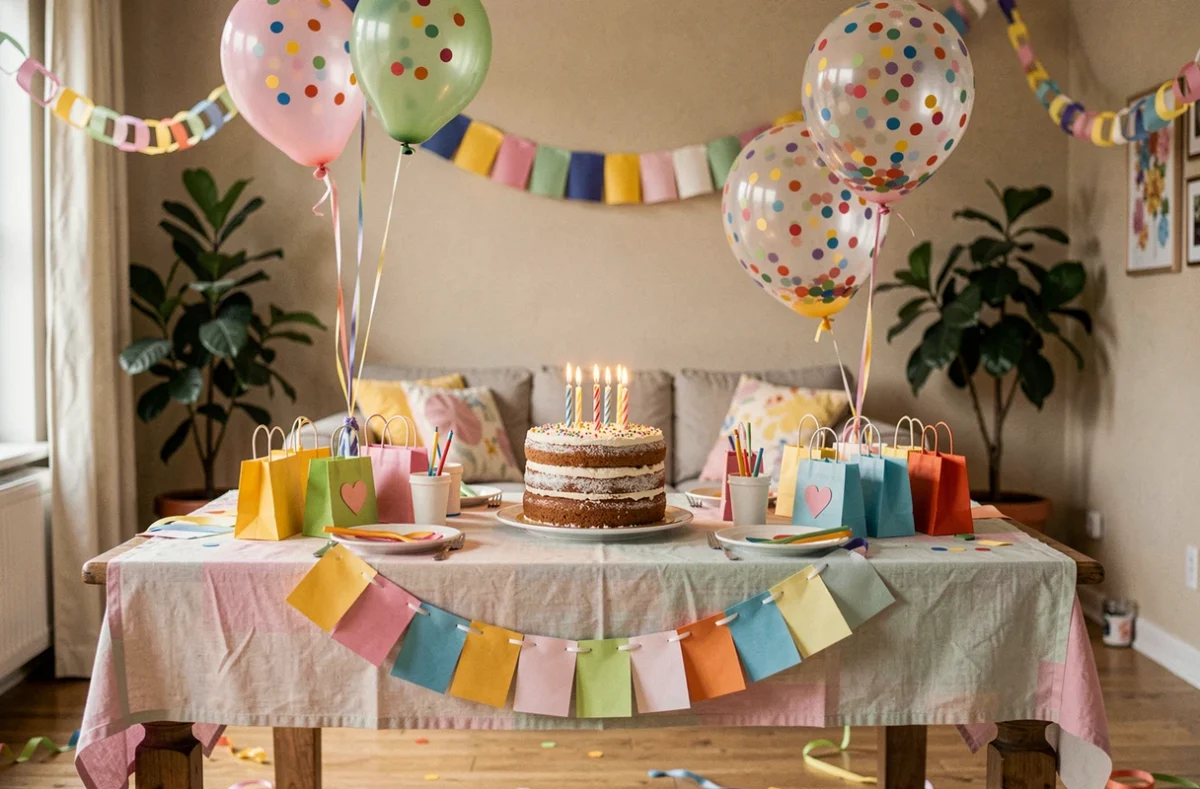
A successful children’s birthday party relies less on the decorative budget and more on the overall architecture of the event: the sequence of highlights, managing the group’s energy, and coherence between the theme and the proposed activities. Organizing a creative children’s birthday requires thinking of each segment as a standalone block, with a calibrated increase in intensity based on the actual duration of the party.
Noise disturbances and children’s birthday parties: the legal framework to know
Home birthday parties generate a noise level that neighbors may contest. The noise from children running, shouting, or jumping falls into the category of behavioral noise, subject to the Public Health Code. Repeated or excessive noise, even during the day, can lead to a complaint for neighborhood noise disturbance.
The decree of May 11, 2023, now requires an attempt at amicable resolution before any referral to the judicial court for this type of dispute. In practice, a disgruntled neighbor must first go through mediation or conciliation before initiating proceedings. This changes the game for parents who regularly host parties in apartments or semi-detached houses.
We recommend notifying neighbors in writing at least a week before the party, specifying the time slot. Setting a firm end time and planning quiet activities at the end of the day significantly reduces the risk of conflict. In a co-owned property, checking the internal regulations remains a reflex not to be neglected.
Several service providers specializing in birthday animation and decoration offer packages adapted to space and noise constraints, like those listed on frimousse-et-coccinelle.fr, which allow structuring the party around low-noise creative activities.
Sequencing activities: building a program that lasts
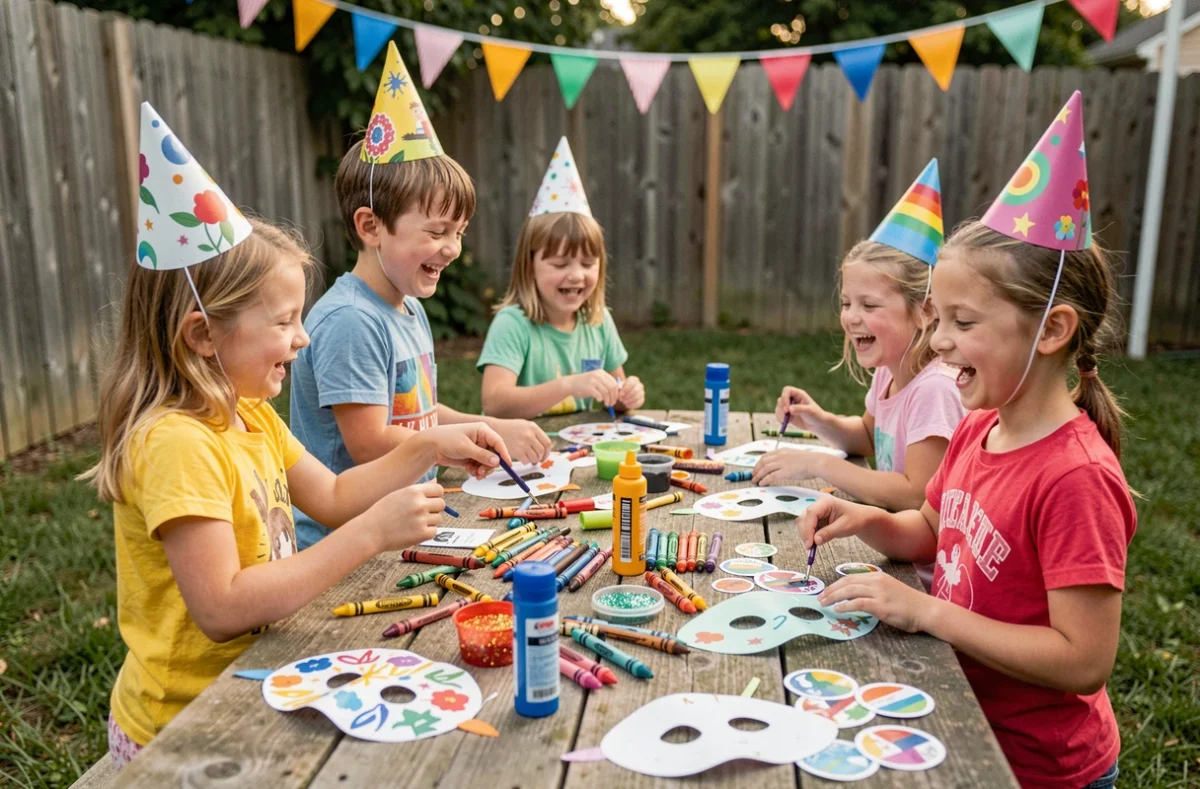
The most common mistake is stacking games without transitions, which causes a collective overexcitement that is difficult to channel. Alternating physical activity and quiet time every twenty minutes helps maintain the group’s attention without exhausting the children or the parents.
A solid program for a two-hour party is divided into four blocks:
- A structured welcome time with a self-directed activity (coloring, free construction, sticker workshop) that absorbs staggered arrivals without creating downtime
- A first high-energy group game (treasure hunt, obstacle course, relay race) that unites the group and establishes the dynamic
- A supervised creative workshop (making an object to take home, customizing t-shirts, modeling) that calms the excitement while producing a tangible memory
- The snack followed by a final quiet game (quiz, musical blind test, guessing game) before departure
This sequencing is not rigid. If the group is small (fewer than six children), the collective game can be replaced by a second workshop. The goal remains the same: each block must have a specific function in the energy curve.
Eco-responsible birthday: going beyond recycled decorations
The trend towards low-impact parties goes far beyond compostable tableware. Parents adopting an eco-responsible approach rethink the very format of the birthday: nature outings instead of rented halls, upcycling workshops using recovered materials, reducing the number of individual gifts in favor of a collective gift or a cash fund.
The menu also evolves. Less meaty snacks, homemade cakes with seasonal ingredients replace industrial assortments. Waste sorting during the party becomes a reflex that some parents directly integrate as a fun micro-activity for the children.
Organizing an outdoor birthday (garden, public park, forest) eliminates the issue of disposable decorations and naturally reduces disturbances for the neighbors. The natural setting offers a free playground suitable for treasure hunts, observation games, and botanical workshops.
Low-cost, high-impact creative workshops
The creative activities that work best are those that produce an object for the child to take home. This object effectively replaces the traditional bag of candies and extends the memory of the party.
Some proven formats: making rolled beeswax candles, creating personalized badges, painting on pebbles, assembling small bound notebooks. The unit cost of these workshops remains marginal compared to buying pre-filled goodie bags, and the impact on the children is incomparably stronger.
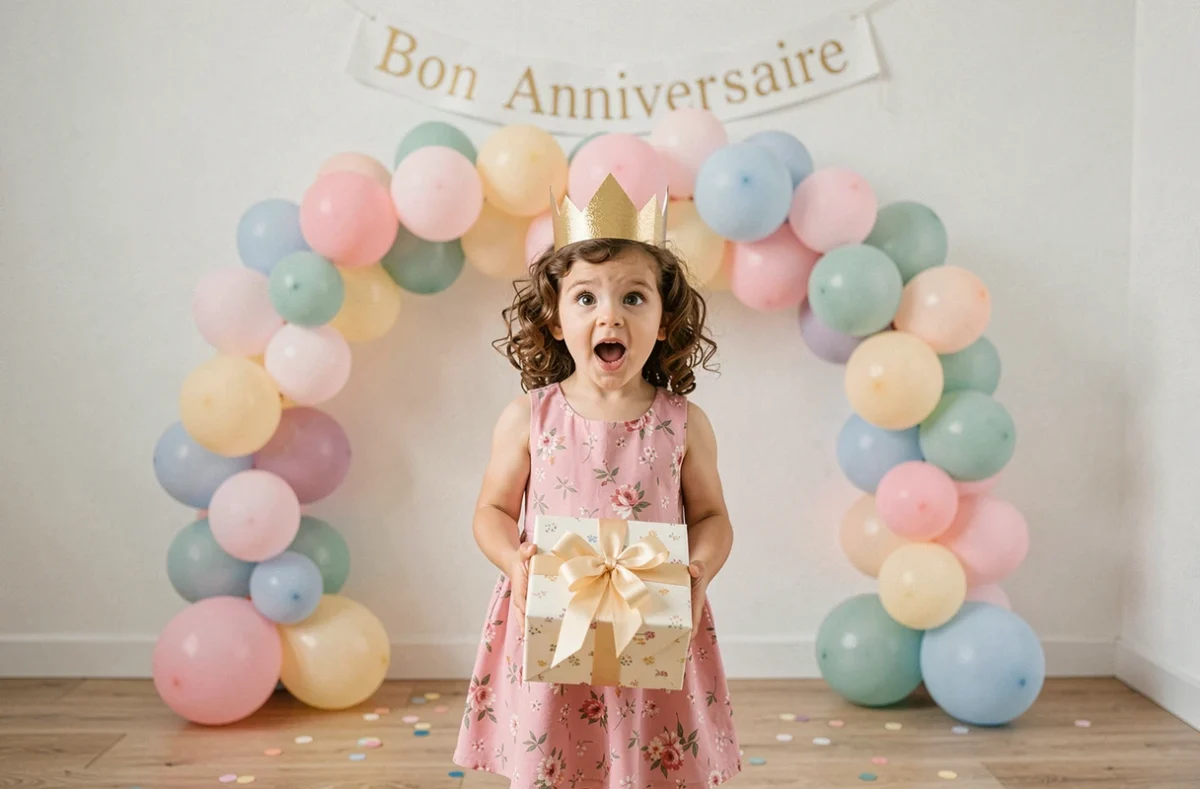
Birthday theme: choosing an exploitable guiding thread
A successful theme is not one that generates the most decoration, but one that translates into activities. A “pirates” theme without a treasure hunt or nautical challenges remains an empty shell. Before choosing, we ask a simple question: does this theme allow for the creation of at least three different activities?
The most exploitable themes share a characteristic: they offer a narrative universe in which children can play a role. Detective, explorer, scientist, cook – each child receives a mission or a minimal costume that anchors them in the story. The theme becomes a driver of play, not a decorative pretext.
Involving the child in choosing the theme remains fundamental, but framing it avoids deviations. Offering three pre-filtered options (because they can be translated into concrete activities) rather than an open choice helps maintain logistical control while respecting the child’s desires.
The most memorable birthday party is not the one that costs the most or showcases the most spectacular decorations. It is the one where every child participated, created, ran, and laughed at a pace designed for them. The rest is just logistics.